Corporate Apparel: A Guide for Growing Business Teams
What corporate apparel covers, when businesses use it, and what to look for when commissioning it.
What counts as corporate apparel
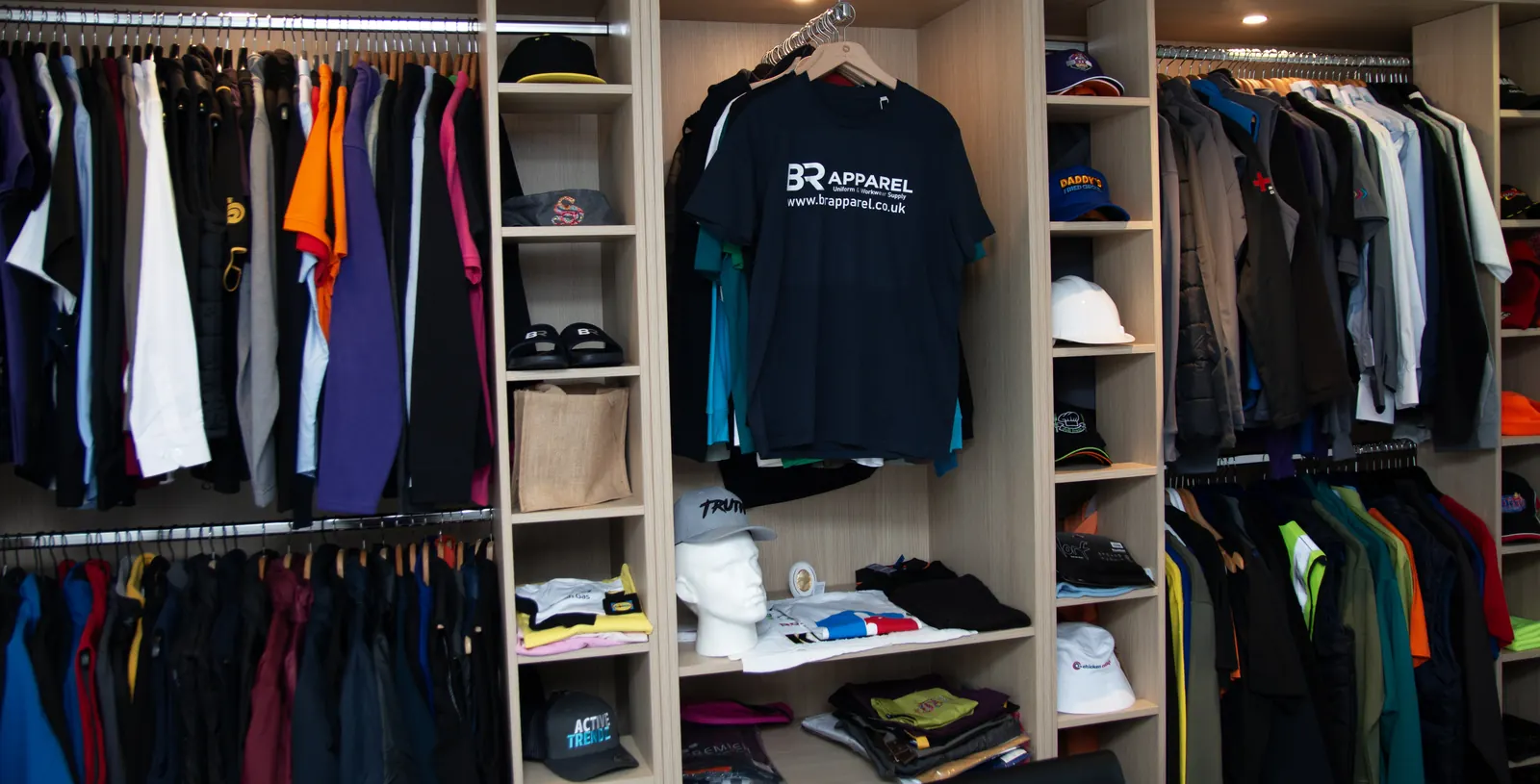
Most businesses that come to us for corporate apparel are not after a uniform in the strict sense. They want their team to look consistent and on-brand across the office, client visits and events. In practice that breaks down into a handful of groupings: branded polos and business shirts for office and client-facing roles, outerwear such as softshells, fleeces and branded jackets, event apparel for exhibitions and conferences, and onboarding packs for new hires.
Corporate apparel is not the same as a uniform
The distinction matters when specifying an order. A uniform is prescriptive: a defined garment that a role is required to wear, often with safety, hygiene or operational reasons behind the choice. Corporate apparel is brand-led: the goal is consistency of appearance and identity rather than standardisation of garment. Office teams might wear corporate polos as an optional kit; a chef wears chef whites because the role requires it.
What this means for orders
Because corporate apparel is brand-led, the priorities shift. Logo placement, thread colour, garment finish and consistency across repeat orders matter more than they typically do for functional workwear. The same logo at slightly different sizes across two batches of polos reads as a brand problem on a corporate garment, even where it would pass without comment on a high-vis vest.
Corporate apparel is the brand expressed as clothing, not a uniform with the brand stamped on it.
Corporate & Event Apparel Categories
The four practical groupings most corporate apparel programmes work with, and the garment types that typically sit under each.
Corporate Wear
Branded polos, shirts, blouses, knitwear
Outerwear
Jackets, fleeces, softshells
Event & Exhibition Apparel
Polos, tees, hoodies, layered staff packs
Onboarding Packs
Defined apparel sets for new starters
When businesses use corporate apparel
The use cases tend to cluster into five recurring scenarios. Each produces different requirements around garment type, finish and how the order is structured.
New starter onboarding
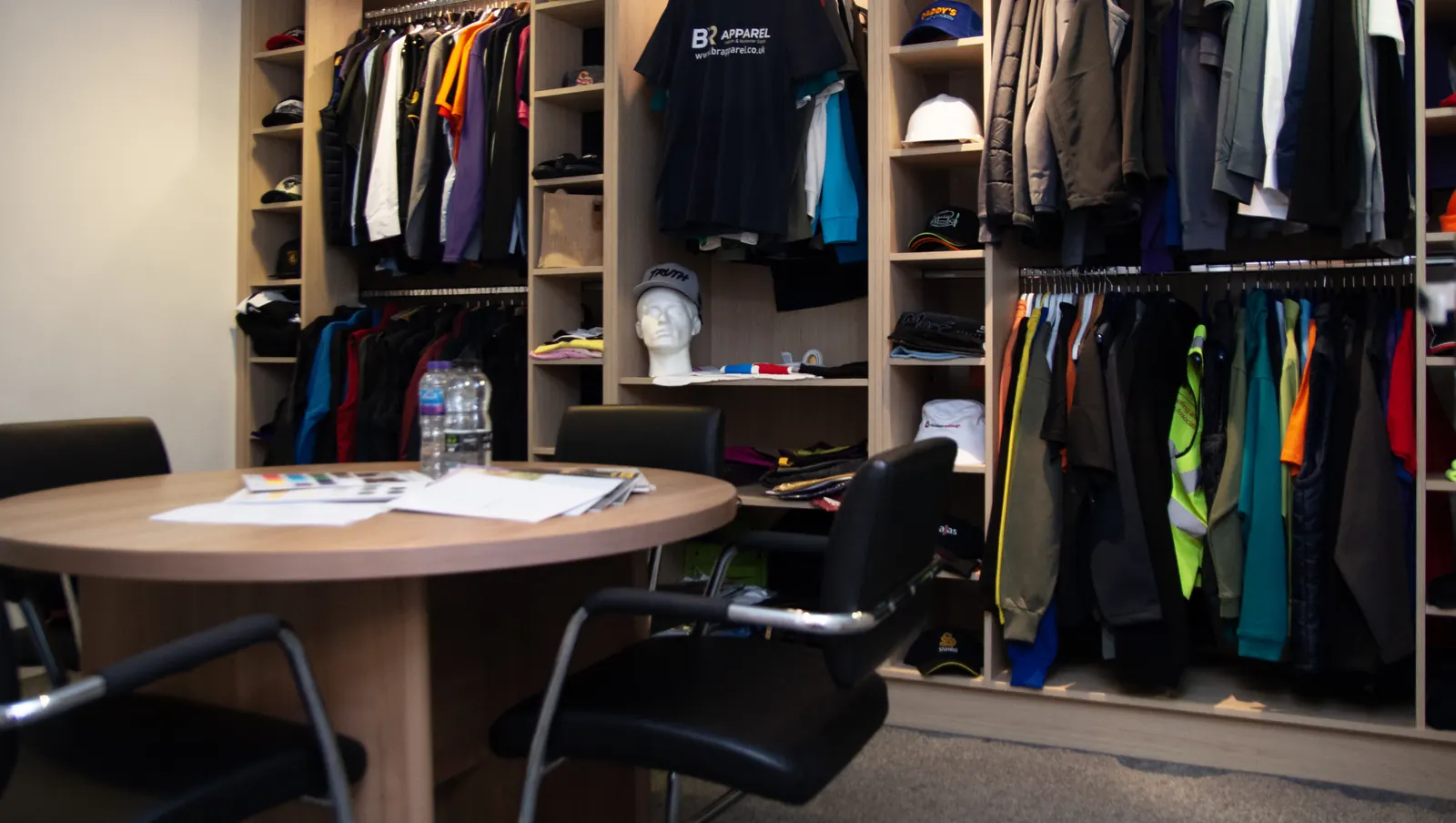
Most growing businesses settle on a pack of two or three branded garments given to new hires on or before their first day: typically a polo, a softshell or fleece, and often a notebook or tote. The reasoning is partly cultural (the team looks consistent in week one) and partly practical: it removes the question of what to wear to a company offsite or client visit.
Exhibitions, trade shows and conferences
Stand teams almost always wear branded apparel for two reasons: visitors need to identify staff at a glance, and photography from the event is reused across marketing for the rest of the year. Garments need to look identical across the team, survive a long day on a stand floor, and photograph cleanly under exhibition lighting.
Field sales and client-facing roles
Sales teams visiting client sites often sit in a middle ground between a uniform and office wear. Smart embroidered polos and softshells are common because they read as professional without being formal, work across multiple client environments, and avoid the variability of asking staff to choose their own shirt for each visit.
Internal events and team days
Company kick-offs, away days, charity events and milestone celebrations frequently produce a run of branded hoodies, t-shirts or jackets. These tend to be one-off runs rather than ongoing programmes, but the same branding consistency rules apply if the garments will appear in internal photography or social media.
Branded gifts to staff and stakeholders
Some businesses use corporate apparel as a gift: a branded fleece or jacket at a service anniversary, a kit at the end of a major project, or an item issued to partners and contractors who appear at client events. The garment quality bar tends to be higher than for everyday work apparel because the item is intended to be worn outside the office.
Branding methods for corporate apparel
Three methods cover almost all corporate apparel work. The right choice depends on the garment, the logo, and where the apparel will be worn.
Embroidery
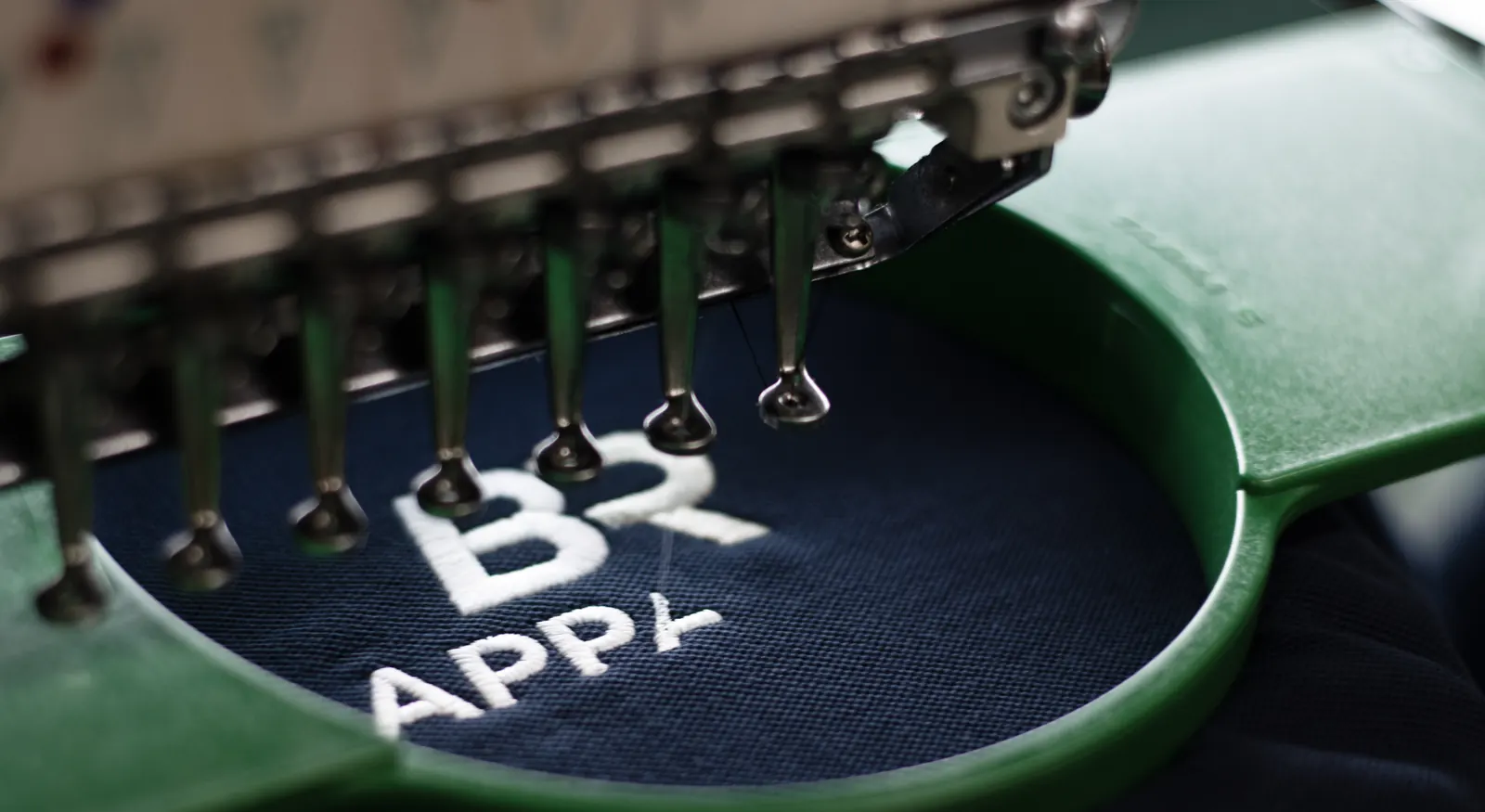
Embroidery is the corporate default for polos, business shirts, softshells and fleeces. The stitched logo reads as professional, survives repeated commercial laundering and tends to hold its appearance for the working life of the garment. For most office, sales and client-facing wear, embroidery is the method to start from unless the design or budget forces a different choice.
DTF transfers
DTF transfers sit better than embroidery on lightweight garments such as t-shirts and lighter event apparel, where stitching would feel heavy or distort the fabric. DTF also handles full-colour and photographic detail that embroidery cannot reproduce. The trade-off is that printed finishes are less long-lived than embroidery under intensive laundering.
Screen printing
Screen printing tends to come into play on higher-volume promotional runs: branded t-shirts for a launch, conference giveaways, or one-off event apparel where unit cost matters more than the soft hand-feel of a transfer. Screen printing is rarely the right call for low-volume corporate orders where setup costs dominate.
Pantone matching in practice
Pantone matching is the question of whether the brand colour on the garment actually matches the brand colour in the guidelines. For embroidery, suppliers work from thread libraries that approximate Pantone references rather than hitting them exactly; the closest available thread is selected and recorded. For printed methods (DTF and screen print) the colour space is wider and matches can sit closer, though substrate and ink interaction still introduces small variance. For brand guidelines that tolerate a documented "closest match" both routes work. For guidelines that require exactness on a specific Pantone, the realistic answer is printed methods on a controlled substrate, not embroidery.
For a deeper general comparison of methods, see embroidery versus printed logos.
What to look for in a corporate apparel supplier
Corporate apparel supply tends to be a multi-year relationship rather than a single transaction. A short evaluation against six criteria usually separates suppliers that will hold up over repeat runs from ones that will gradually create work for the team commissioning them.
- 01
Where production actually happens
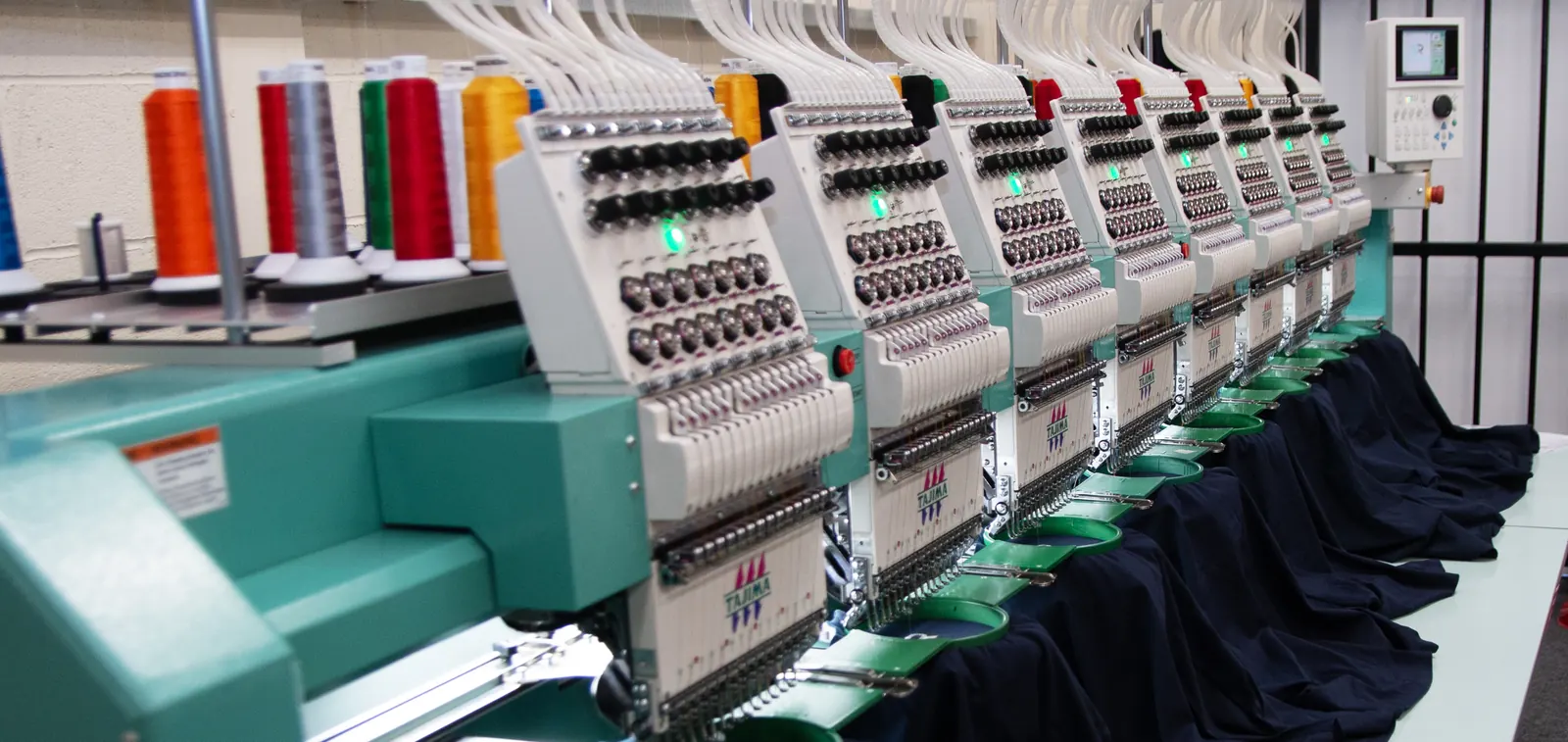
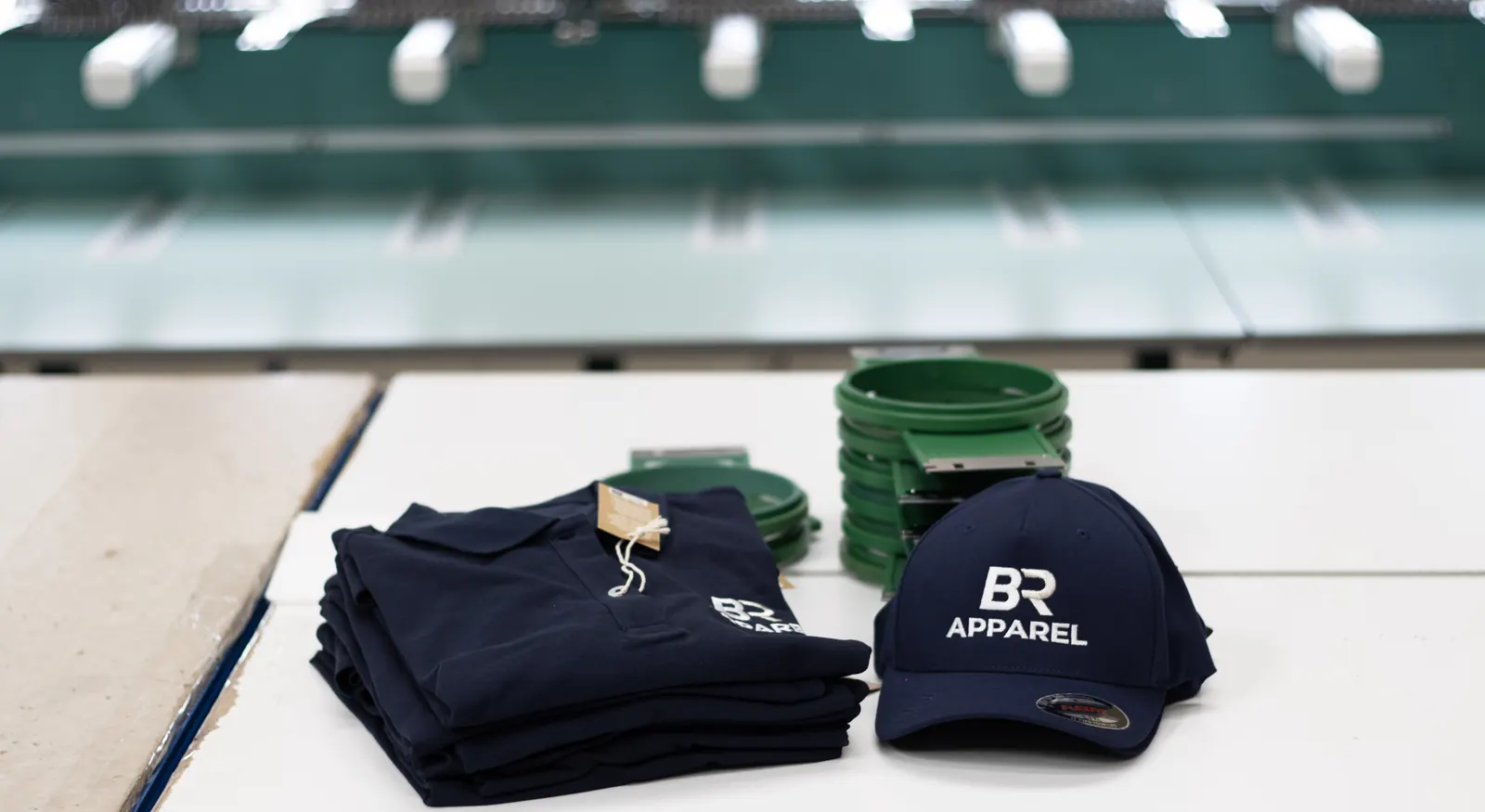
Some suppliers hold stock and route branding to third-party embroiderers or print houses. Others run embroidery and print equipment in-house. In-house production tends to give tighter control over repeat consistency and shorter turnaround on small orders, because work does not have to be queued at an external partner.
- 02
Consistency mechanisms across repeat orders
Ask what is held on file between orders: digitised embroidery files, locked Pantone references, logo placement specs and a saved sizing matrix. These files are what allow a reorder six or twelve months later to come back looking identical to the first run. Without them, every reorder is effectively a new order.
- 03
Garment range and quality bar
A supplier that can cover polos, business shirts, softshells, fleeces, jackets and event apparel from one account simplifies ordering. The quality bar matters more for corporate apparel than for purely functional workwear, because the garment carries the brand. Ask what brands and weights of base garment are stocked, and request a sample of an actual finished embroidered piece rather than only a swatch.
- 04
Lead times for first orders and reorders
A first-order lead time on a new logo is useful but rarely the binding constraint over a multi-year relationship. The more important figure is the lead time on reorders once artwork and sizing are on file, and the response time on small replacement runs of one or two items for a new starter.
- 05
Pantone matching support
For brand-led apparel this is worth asking about specifically. A supplier should be able to record the thread and ink references selected for the brand colours, hold those references against the account, and reproduce them on every subsequent order without rerunning the colour selection process.
- 06
Onboarding pack management
If the business hires regularly, the practical question is whether the supplier can run onboarding packs as an ongoing workflow rather than a series of ad-hoc orders. That usually means a pre-agreed pack contents list, locked sizing options, and the ability to raise an order against a new hire without re-specifying the kit each time.
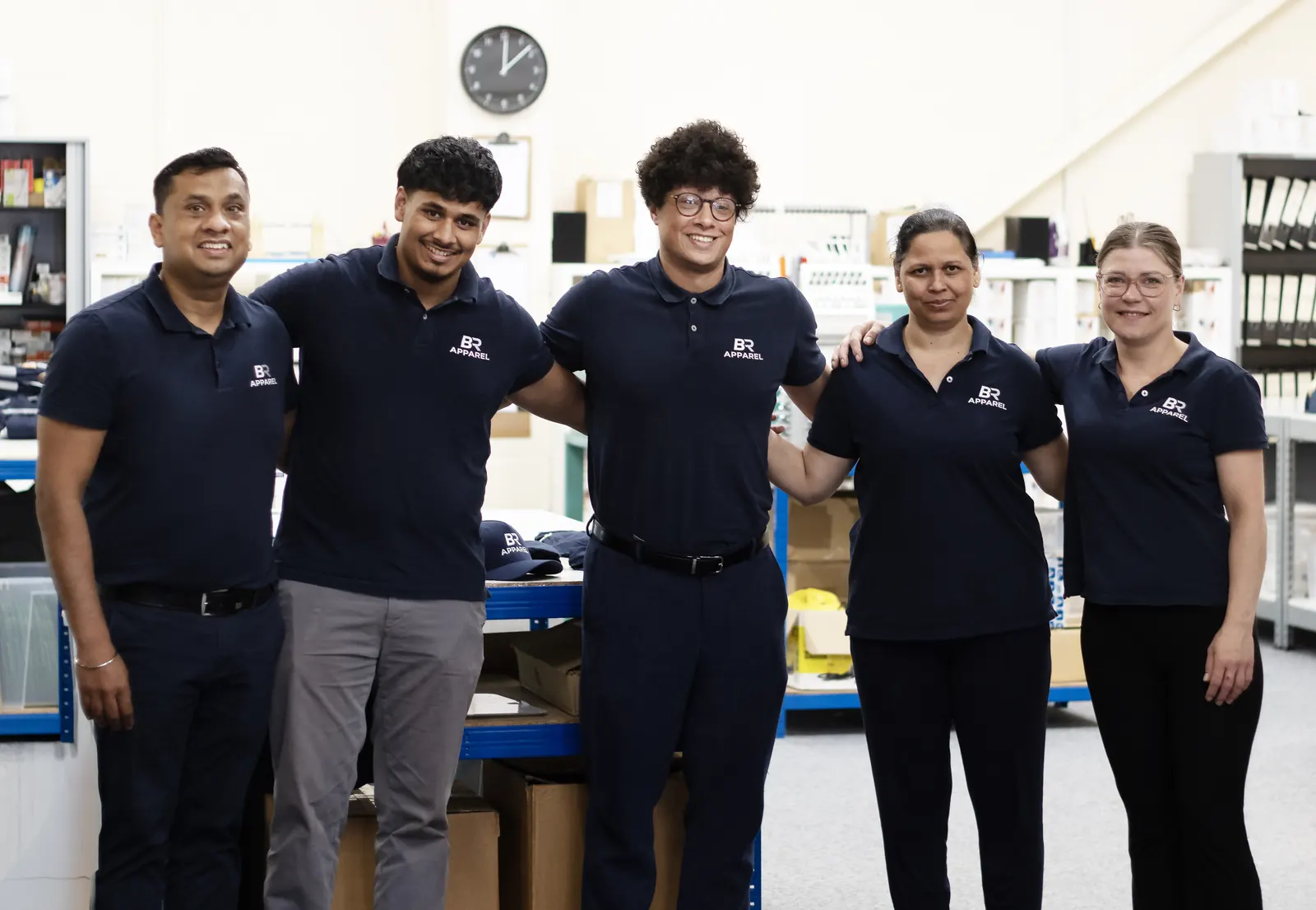
For businesses in West Yorkshire, BR Apparel is one example of a Bradford-based supplier running embroidery and print in-house with this kind of workflow. The corporate uniform supplier page sets out the production setup, the garment categories covered and how reorders are handled.
Common mistakes with corporate apparel programmes
The recurring failure modes are mostly programme-level rather than garment-level. The garments themselves are usually fine; the problems come from how ordering and ownership are structured.
Letting different departments order independently
When marketing, HR, sales and operations each order branded apparel directly, logo size, thread colour and garment choice drift between teams. After a couple of cycles the business has visually different garments in circulation, even though everyone followed the same brand guidelines on paper.
Not holding the specification on file
If the embroidery file, Pantone references, logo placement and sizing matrix only live in an old email thread, every reorder starts from scratch. The supplier reinterprets the brief, the new run drifts slightly from the previous one, and the drift compounds across years.
Splitting orders across multiple suppliers
Using one supplier for polos, another for event tees and a third for outerwear usually produces garments that do not match. Different suppliers digitise logos differently, stock different base garments, and use different thread brands. The cost of consolidating with a single supplier is usually paid back in branding consistency.
Ordering ad-hoc instead of running a programme
Treating corporate apparel as a series of one-off purchases (event by event, hire by hire) produces unpredictable lead times and inconsistent spend. Running it as a programme, with agreed garment categories, agreed pack contents and an ongoing supplier relationship, removes most of the firefighting that comes from ad-hoc orders.
Treating onboarding apparel as an HR afterthought
Onboarding kit is one of the first physical brand touchpoints a new hire experiences. When the order is placed reactively, sized wrong or arrives in week three, the impression created is the opposite of the one the business wanted to make. The fix is usually to spec the pack once and order against it whenever a new hire is confirmed.
Looking for a corporate apparel supplier in Yorkshire?
We’re BR Apparel, a Bradford-based supplier working with corporate teams across West Yorkshire. Our supplier page sets out how we handle production, branding consistency and repeat orders.
See how BR Apparel works