What Is DTF Printing?
How Direct to Film printing works, which fabrics it suits, and when it beats embroidery or screen printing for branded workwear and uniforms.
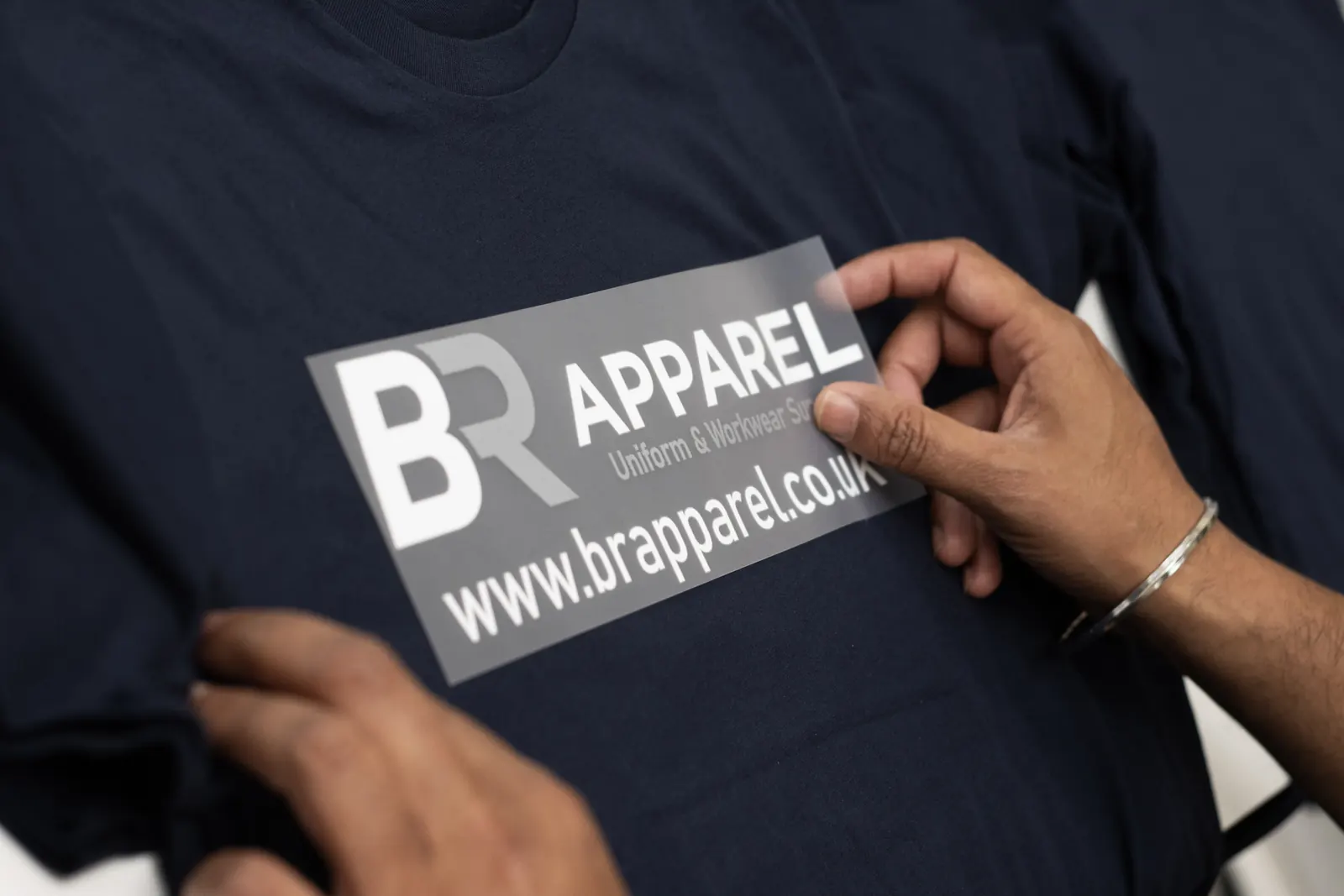
DTF stands for Direct to Film. It is a printing method where a design is printed onto a special film, coated with an adhesive powder, and then heat pressed onto a garment. It has become one of the most common ways to put full-colour logos onto workwear and uniforms.
Its appeal is simple. DTF handles unlimited colours, works on fabrics that other print methods struggle with, and does not need the setup that screen printing does. That makes it practical for the kind of order most businesses actually place: a modest number of garments, in a mix of styles, carrying one full-colour logo.
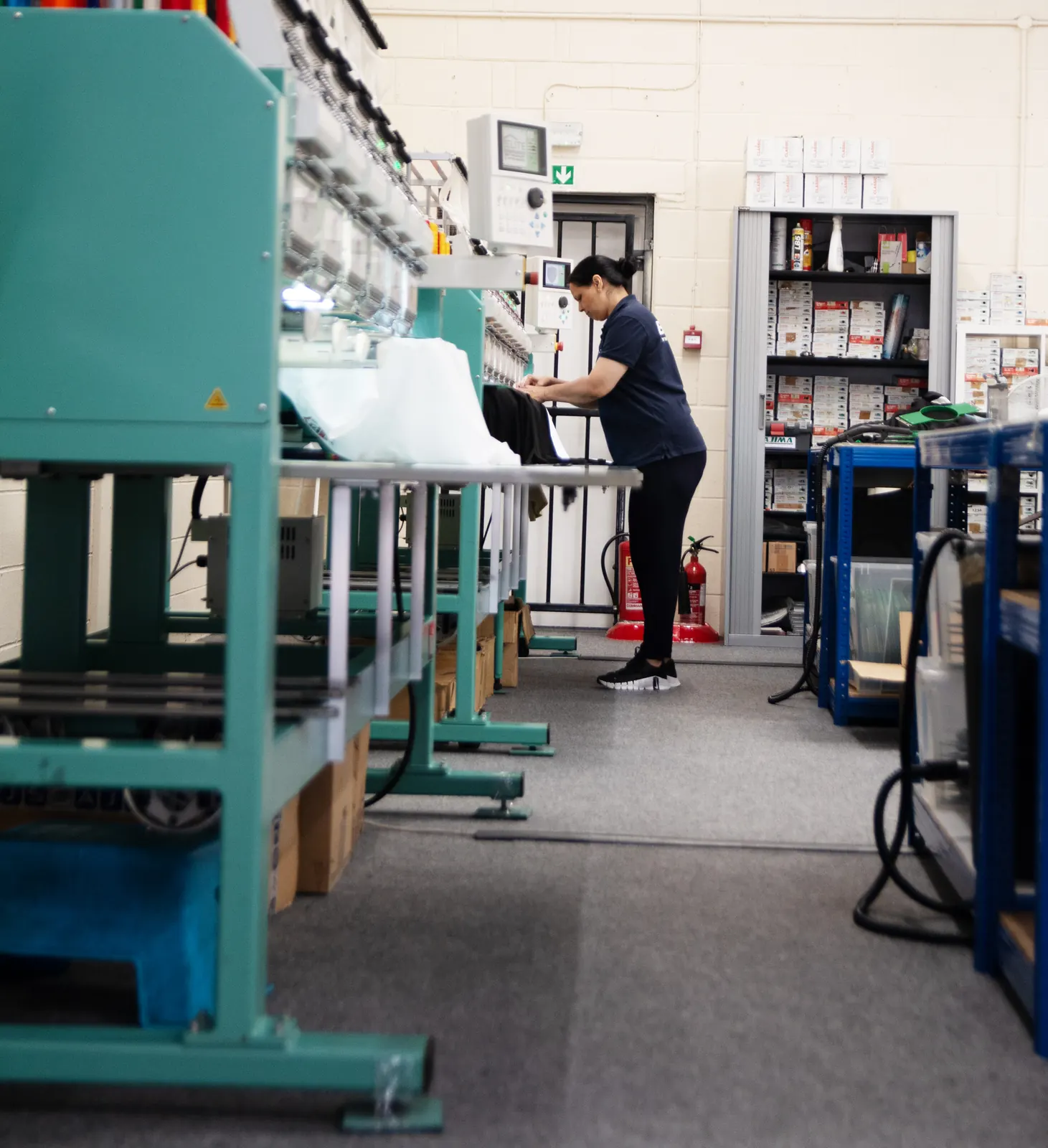
This guide covers what DTF printing is, how the process works step by step, which fabrics it suits, how it compares to embroidery, screen printing and vinyl, and how to look after it. BR Apparel runs DTF in-house at our Bradford facility alongside embroidery.
How DTF Printing Works
The design never touches the garment until the final stage. It is built up on film first, which is what lets DTF carry so much colour detail and sit on fabrics that other methods cannot handle.
- 01
Artwork is prepared
The design is sized and set up for print. DTF takes full-colour artwork directly, so there is no separating a logo into individual colours the way screen printing needs, and no digitising it into stitches the way embroidery does.
- 02
The design is printed onto film
A specialist printer lays the design onto a clear PET film in CMYK, then prints a solid white layer behind it. That white underbase is what keeps the colours bright on navy, black and other dark garments.
- 03
Adhesive powder is applied
A hot-melt adhesive powder is applied to the wet ink and shaken off everywhere else, so it sticks only to the printed design. The film then passes through a curing unit which melts the powder into the ink.
- 04
The transfer is heat pressed
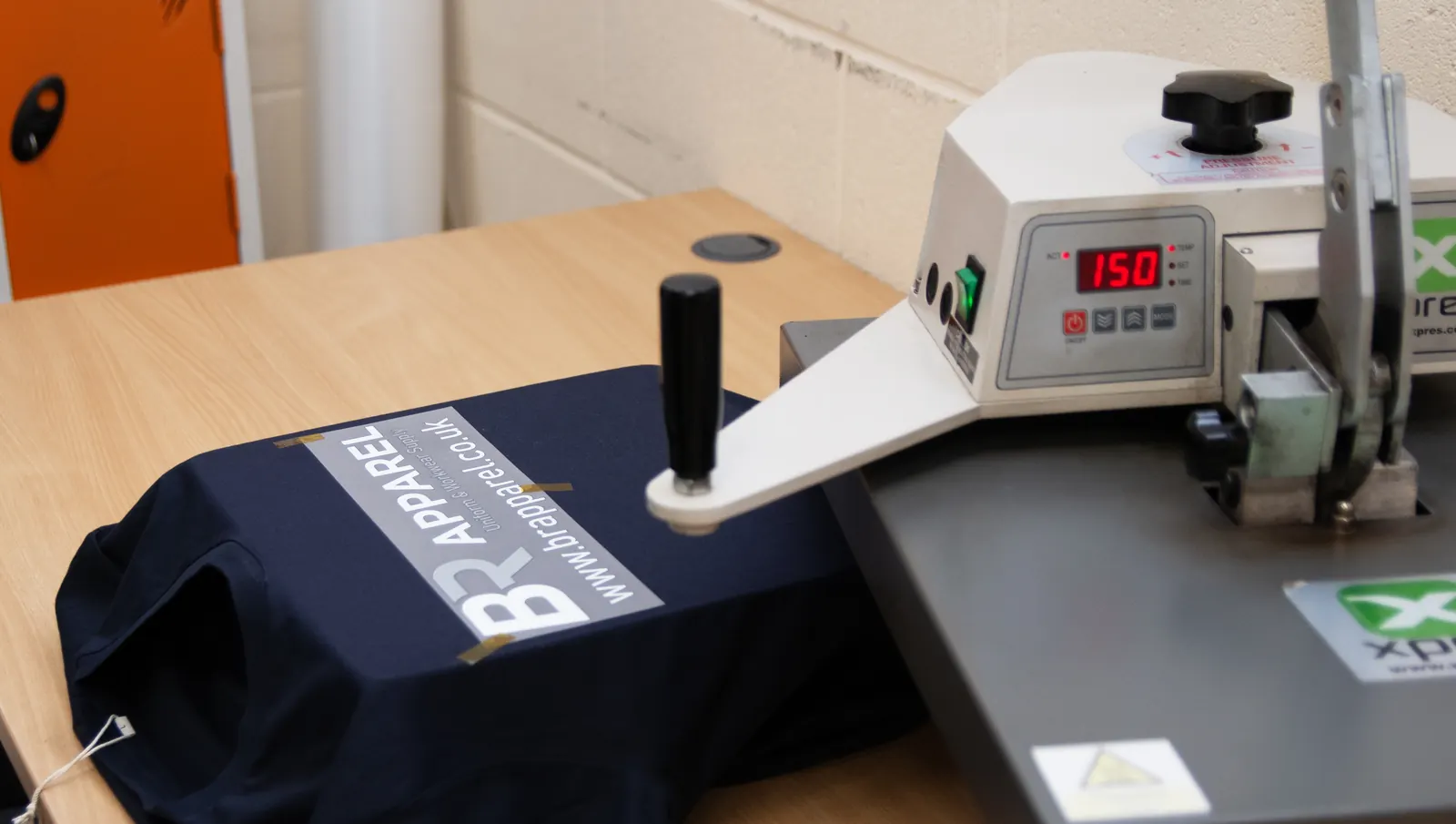
The film is positioned on the garment and pressed with heat and firm pressure, typically at around 150 to 160°C for 10 to 15 seconds. This bonds the design into the surface of the fabric.
- 05
The film is peeled away
The carrier film is peeled off, hot or cold depending on the film, leaving the design on the garment. A short second press is often used to finish the surface and improve durability.
Press settings vary. Temperature, time and peel method depend on the film and powder being used and on the fabric underneath. The figures above are typical rather than universal.
What Fabrics DTF Works On
This is where DTF earns its place. Direct to garment printing is built around cotton and loses brightness on synthetics. DTF does not care nearly as much, because the ink bonds to the surface of the fabric rather than soaking into the fibres.
In practice that means one design can go across a mixed order: cotton t-shirts, polyester performance tops and poly-cotton workwear, all matching, all in the same run.
- Cotton and cotton-rich jersey, the standard t-shirt and polo base
- Polyester and performance fabrics, including sports and moisture-wicking tops
- Poly-cotton blends, which covers most workwear polos and hoodies
- Nylon, canvas and bag fabrics
- Dark garments, because of the printed white underbase
DTF Compared to the Alternatives
No single method wins on everything. The right one depends on the artwork, the fabric and how many you are ordering.
| Method | Colours | Fabrics | Best run size | Feel |
|---|---|---|---|---|
| DTF transfer | Unlimited, including photographic | Cotton, polyester, blends, nylon, performance fabrics | Small to medium runs | Thin flexible layer on the surface, with some stretch |
| Embroidery | Limited by thread, no gradients | Anything with enough weight to carry stitching | Any run size | Stitched into the garment, raised and textured |
| Screen printing | One screen per colour, so cost rises with colours | Best on cotton and cotton-rich blends | Large runs of the same design | Ink laid into the fabric, very thin |
| Vinyl (HTV) | Usually one or two, cut not printed | Most fabrics | Very small runs, names and numbers | Solid cut layer on the surface |
For a longer look at the two methods most uniform orders come down to, see our embroidery vs printed logos guide.
When to Choose DTF
A quick way to match the job to the method. Where an order spans both, there is no reason it cannot use two: embroidery on the permanent kit, DTF on the lighter or event garments.
- Full-colour, photographic or gradient artworkDTF
- A small run, or a design across mixed garment typesDTF
- Polyester, performance or lightweight fabricDTF
- Hundreds of the same one or two colour designScreen printing
- Daily workwear that has to look premium and lastEmbroidery
- Individual names and squad numbersVinyl or DTF
- Fleeces, softshells and heavier outerwearEmbroidery
The honest limitation
DTF sits on the surface of the fabric. On heavy daily workwear that gets washed hard and often, embroidery still looks better for longer, and on very large runs of a simple one-colour design screen printing works out cheaper per garment. We will tell you when one of those is the better call rather than defaulting to DTF.
How Long DTF Lasts
A correctly applied transfer should not crack, peel or fade under normal use. Most of the failures people describe come from one of two things: the press being wrong at application, or the garment being tumble dried on high heat every week. Get both right and a DTF print will comfortably see out the working life of the garment.
Wash inside out at 30 to 40°C
Turning the garment inside out keeps the print off the drum and away from the worst of the abrasion. A normal cycle at 30 to 40°C is fine.
Skip the tumble dryer where you can
Repeated high-heat drying is harder on a transfer than washing is. Air drying noticeably extends how long a print stays crisp.
Never iron directly onto the print
If a garment needs pressing, turn it inside out or place a cloth over the design. Direct contact with a hot iron will mark the surface.
Avoid bleach and harsh detergents
Standard detergent is fine. Bleach and heavy-duty stain removers will lift the colour out of the print faster than normal wear would.
Ordering DTF Printing in Bradford
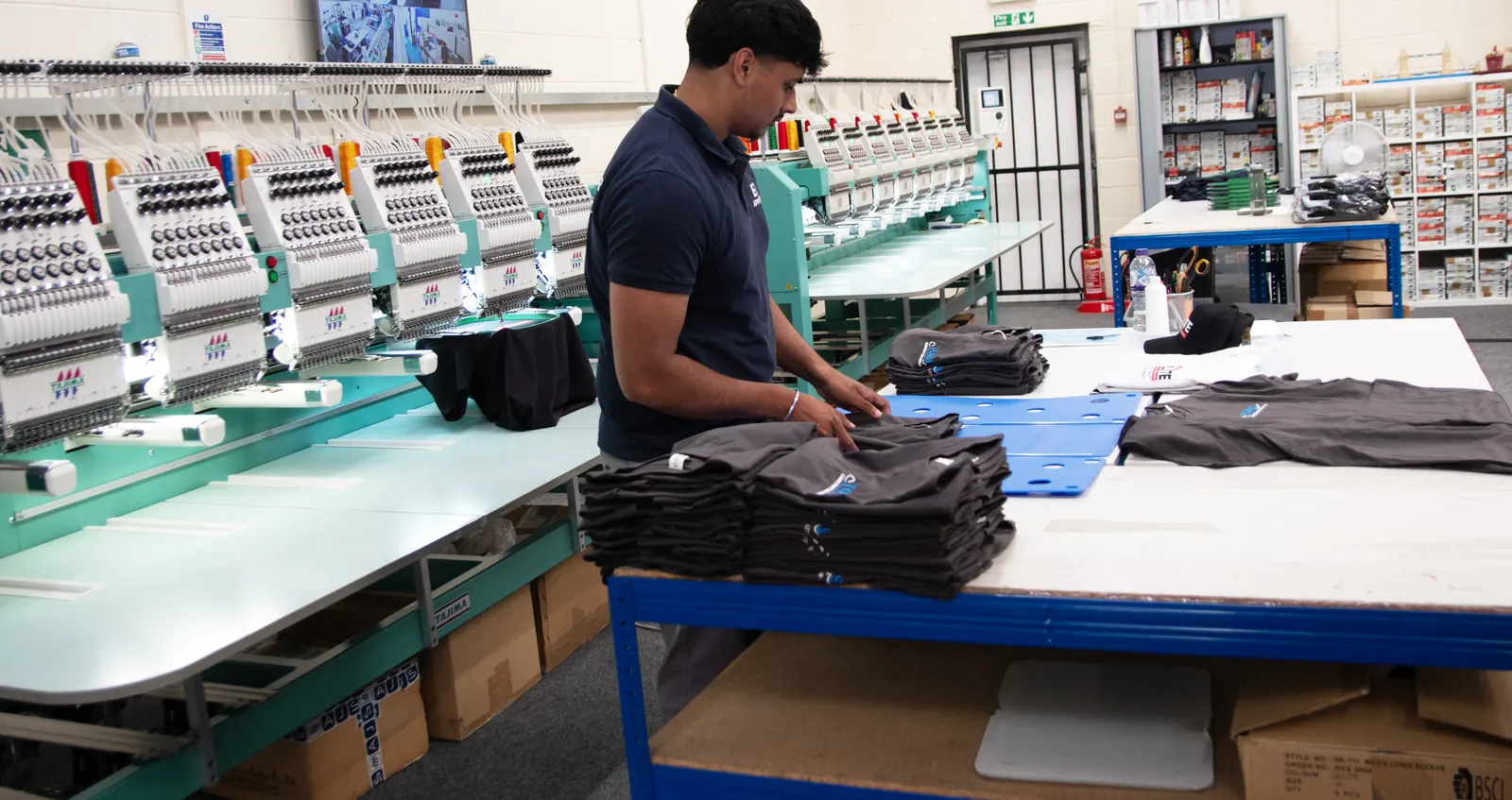
We run DTF in-house at our Bradford facility, alongside embroidery and screen printing. Nothing is subcontracted out, which is what lets us hold turnaround and split a single order across more than one branding method when that gives a better result. For what DTF does on specific garments, how it is placed on hi-vis without losing certified area, and the artwork we need, see DTF printing in Bradford.
- Minimum order10 items
- Minimum on re-ordersNone
- Turnaround from artwork approval4-5 working days
- Quote returned within24 hours
We supply and brand workwear for teams across Bradford and West Yorkshire, from construction and logistics to hospitality and corporate teams. For a broader look at what branded uniform costs, see the uniform pricing guide.
Need DTF Printing
for Your Team?
Send us your artwork and quantities and we will tell you whether DTF is the right method for the job, with a quote back within 24 hours.
Get a QuoteDTF Printing FAQs
Common questions on how DTF printing works, what it lasts like and how it compares to other methods.
- DTF stands for Direct to Film. The design is printed onto a clear film in full colour with a white layer behind it, coated with a hot-melt adhesive powder, cured, and then heat pressed onto the garment. The film is peeled away and the design stays on the fabric. It is used for full-colour logos on workwear, uniforms and t-shirts.
- DTG, or Direct to Garment, prints ink straight into the fabric and is built around cotton, so it loses brightness on polyester and blends. DTF prints onto a film first and bonds to the surface of the garment, which means it works on cotton, polyester, blends, nylon and performance fabrics. For mixed workwear orders DTF is usually the more practical of the two.
- Neither is better overall. DTF handles unlimited colours with no screens to set up, so it wins on small runs and full-colour or photographic artwork. Screen printing needs a screen per colour but becomes cheaper per garment on large runs of a simple design, so it wins on high volumes. We recommend whichever suits the artwork and the quantity.
- A correctly applied transfer should not crack, peel or fade in normal use and will generally see out the working life of the garment. The two things that shorten it are a bad press at application and repeated high-heat tumble drying. Washing inside out at 30 to 40°C and air drying makes a noticeable difference.
- Cotton and cotton-rich jersey, polyester and performance fabrics, poly-cotton blends, nylon, canvas and bag fabrics. It also works well on dark garments because a solid white layer is printed behind the design, which keeps the colours bright on navy and black.
- The minimum for DTF and screen printing is 10 items. There is no minimum on re-orders of a design we already hold, so a single replacement garment for a new starter is not a problem.
- Standard turnaround is 4-5 working days from artwork approval. We return quotes within 24 hours, and DTF is run in-house at our Bradford facility rather than subcontracted, which is what lets us hold that lead time.