Hospitality Uniform Supply for Multi-Site Operators
How hospitality uniform supply works in practice, and what to look for when commissioning it.
What hospitality uniform supply actually involves
Hospitality uniform supply is rarely a single garment order. For most venues it sits across three connected decisions: which garments each role wears, how branding is applied, and how the same specification gets repeated cleanly the next time staff turn over or a new site opens.
Garments by role
Roles tend to split into four practical groups. Front of house typically wears shirts, polos, waistcoats or knitwear, chosen for appearance and ease of laundering. Back of house wears chef jackets, chef trousers and aprons selected for heat tolerance, stain resistance and safety. Bar and event staff often share a simpler core of polos, t-shirts and aprons. Housekeeping and facilities tend to wear tunics, trousers and durable knitwear that hold up under daily commercial wash cycles.
Branding methods
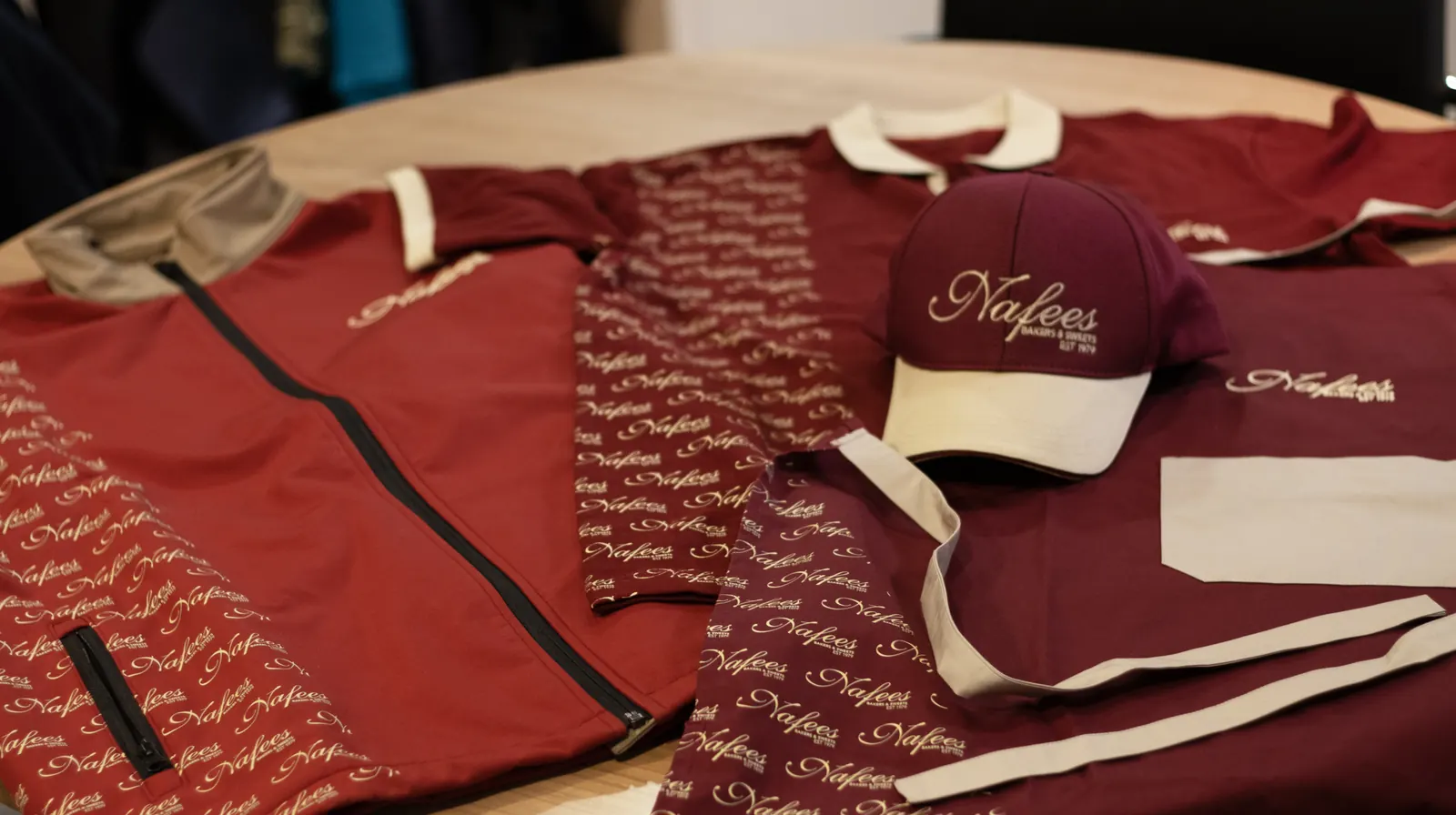
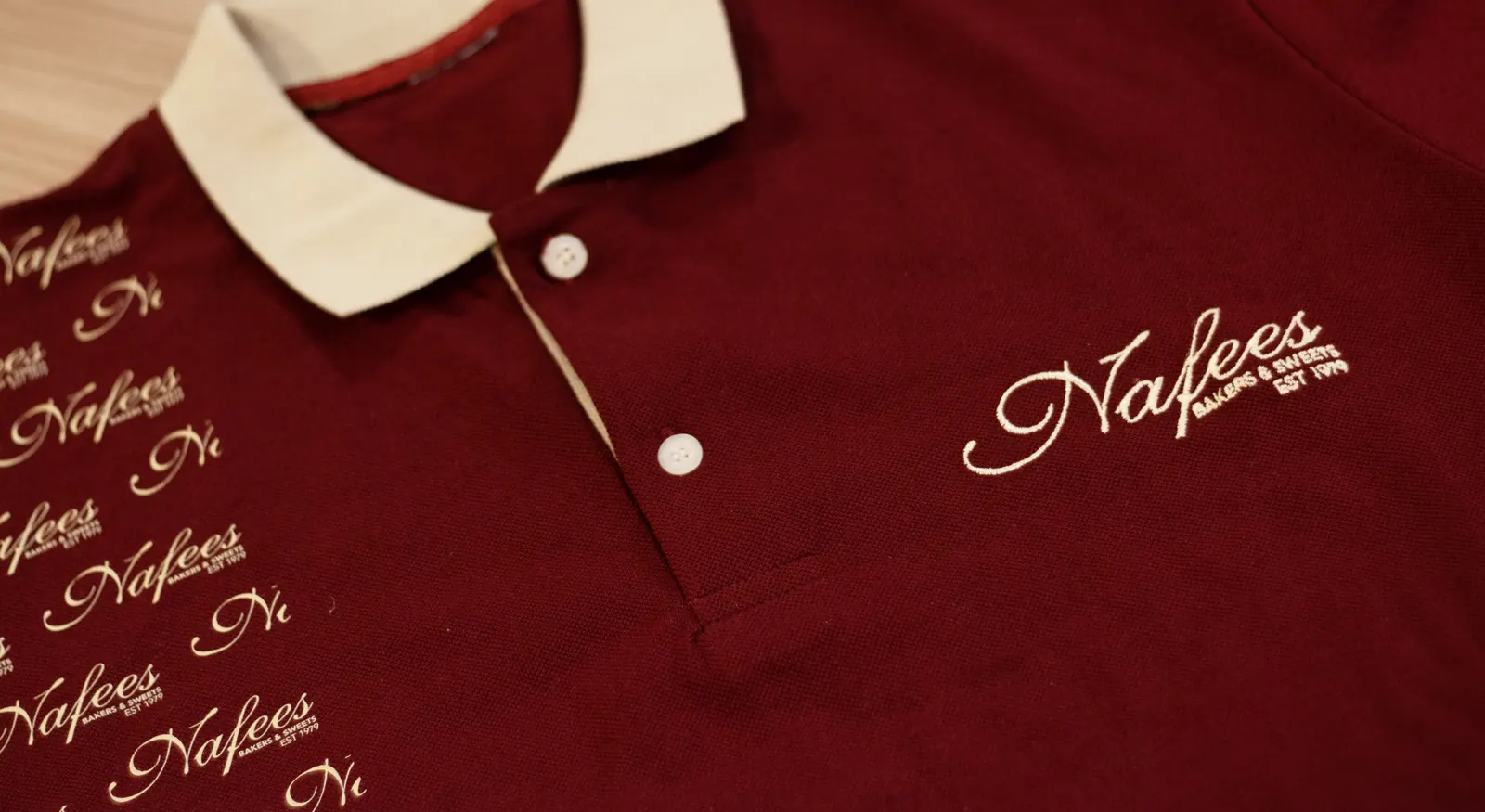
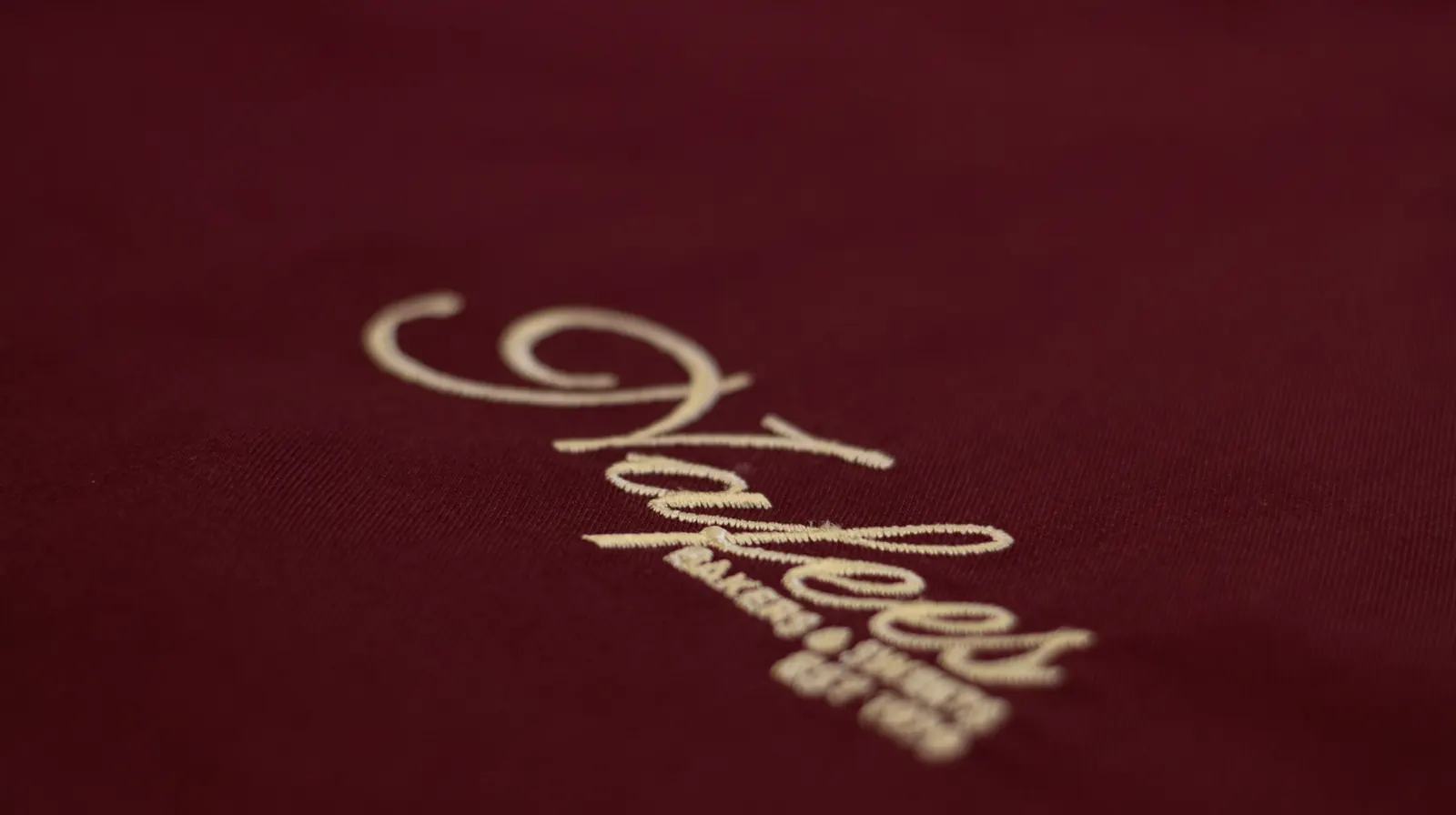
Three branding methods cover almost all hospitality use. Embroidery is the most common choice for polos, aprons and chef wear: the stitched logo sits cleanly through repeated hot washes and tends to hold its appearance for the working life of the garment. DTF transfers suit larger or multi-colour logos on t-shirts and lightweight tops, where embroidery would feel heavy or distort the fabric. Screen printing tends to be reserved for larger one-off runs of event tees and promotional pieces where the unit cost on volume matters more than the soft hand-feel of a transfer.
Multi-site consistency
Groups operating more than one venue usually rely on a small set of controls to stop the uniform drifting. A locked garment list per role, a saved sizing matrix, a digitised embroidery file held by the supplier, and an agreed logo placement spec are the four basics. Without them, two sites ordering six months apart can end up with visibly different uniforms even when the order sheet looks the same.
The uniform stays consistent when the specification is written down, not when it is remembered.
Hospitality Uniform Categories
The four practical role groupings most hospitality operations work with, and the garment categories that typically sit under each.
Front of House
Shirts, blouses, waistcoats, trousers, skirts, knitwear, ties
Back of House
Chef jackets, chef trousers, aprons, hats
Bar & Events Staff
Polos, t-shirts, shirts, aprons, jackets
Housekeeping & Facilities
Tunics, trousers, knitwear, outerwear
Common problems hospitality teams hit with uniform supply
The same handful of issues come up across restaurants, hotel groups, café chains and bar operators. Most are not really about the garments themselves: they are about how orders, branding and lead times are managed over time.
Late deliveries against onboarding cycles
New starters often join in clusters around rota changes or seasonal hiring. When uniform lead times stretch past the start date, supervisors end up improvising with mismatched stock or asking staff to work their first shifts out of uniform.
Brand drift between sites and re-orders
Logo size, thread colour and placement shift gradually when each order is re-quoted from scratch. After two or three runs, garments from different batches no longer match on the shop floor, even though every order looked correct on paper.
Slow turnaround on small replacement orders
Replacing a single damaged jacket or onboarding two new staff often sits behind the supplier’s larger jobs. Lead times that work for an annual bulk order can become a problem when the operational need is one or two pieces a fortnight.
Inconsistency in embroidery quality across runs
Stitch count, digitising and thread brand vary between suppliers and even between machines. Without a saved embroidery file held by one production source, repeat runs can drift in density and finish in ways the original order brief did not anticipate.
Peak demand pressure
Summer hiring, Christmas trading and new-venue openings concentrate uniform demand into short windows. Suppliers running close to capacity often deprioritise small repeat orders during these periods, which lands the pressure back on the operator.
How to choose a hospitality uniform supplier
Hospitality uniform supply is usually a multi-year relationship, not a single transaction. A short evaluation against five criteria tends to flag the suppliers that will hold up over repeat runs from the ones that will gradually create work for the operations team.
- 01
Where production actually happens
Some suppliers hold stock and route branding to third-party embroiderers or print houses. Others run their own embroidery and print equipment in-house. In-house production tends to give tighter control over repeat consistency and shorter response times on small orders, because the work does not have to be queued at an external partner.
- 02
Turnaround commitments, including for re-orders
A stated lead time on a first order is useful, but the more important figure is the lead time for repeat orders once artwork and sizing are on file. Ask whether the supplier treats re-orders differently from new orders, and what their typical response time is on a one- or two-piece replacement.
- 03
Breadth of garment range
A supplier that can cover front of house, chef wear, aprons and housekeeping from one account simplifies ordering. Splitting these across multiple suppliers usually means more invoices, more lead-time variability and a higher chance of branding drift between categories.
- 04
Consistency controls for repeat branding
Ask what is held on file between orders: digitised embroidery files, Pantone references for printed colours, logo placement specs, and locked sizing. The presence of these files is what allows a re-order placed twelve months later to come back looking identical to the first run.
- 05
Multi-site rollout support
If the operator runs more than one venue, the relevant questions are whether the supplier can split deliveries by site, whether they hold separate sizing matrices per location, and whether reorders can be raised by venue managers rather than always routed through head office.
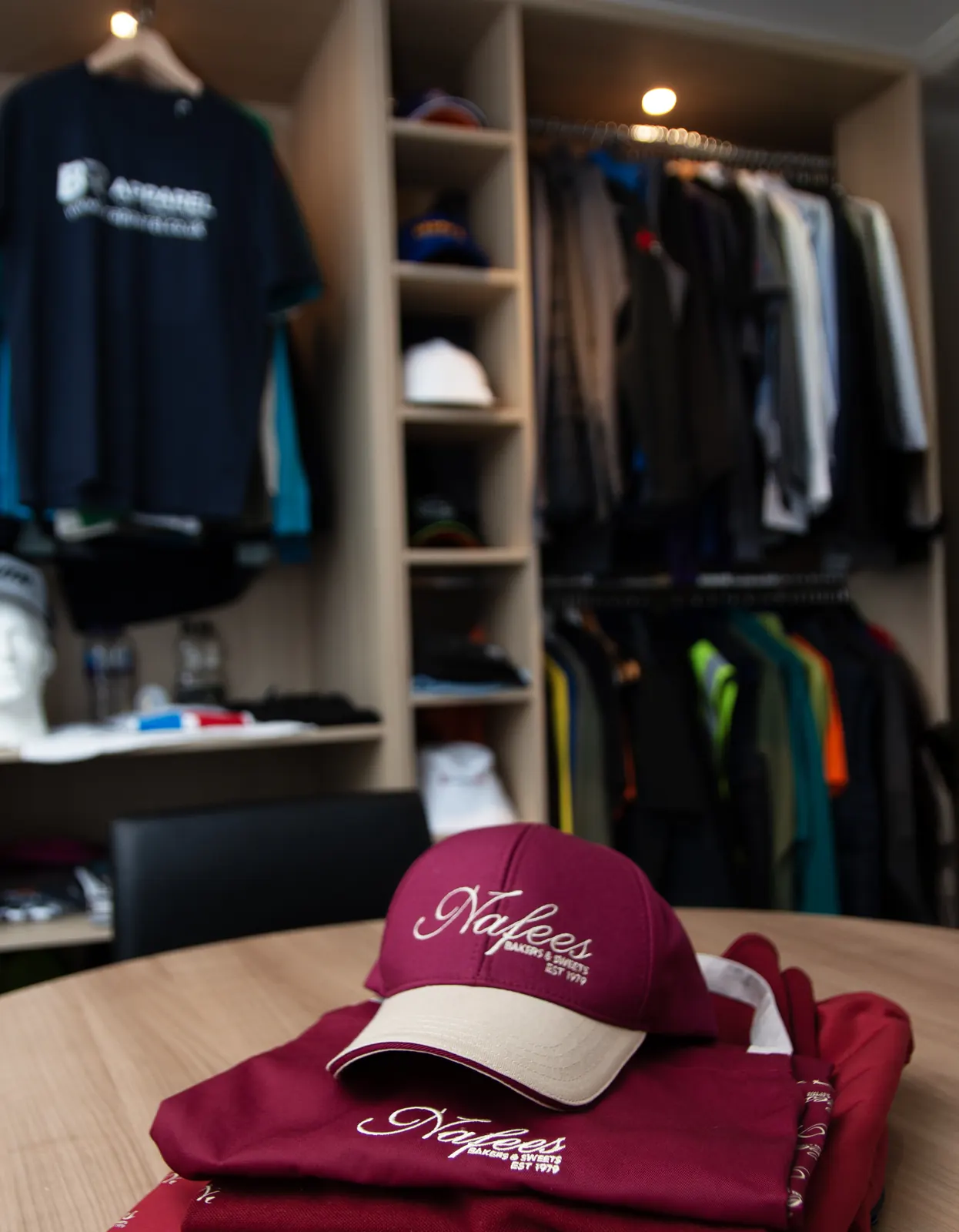
For operators in West Yorkshire, BR Apparel is one example of a Bradford-based supplier running embroidery and print in-house with this kind of workflow. The hospitality uniform supplier page sets out the production setup, turnaround commitments and the garment categories covered.
A prior question for a lot of food and hospitality operators is whether to own the garments at all, since much of the sector runs on weekly uniform rental. The rental versus buying comparison sets the two models against each other over three years, and covers the high-care and heavy-soiling cases where a certified laundry is doing something buying cannot.
Hospitality garment recommendations by role
The notes below cover the garments hospitality teams use most often and the fabric and construction choices that tend to hold up under commercial use. Exact specifications vary by manufacturer and by venue requirements, so treat these as a starting point for a written spec rather than a fixed standard.
Front-of-house polos
A mid-weight polo, typically in a cotton-polyester blend around the 200-220 gsm range, tends to be the practical default for waiting and host staff. The blend holds shape through hot commercial washes better than pure cotton, and the weight is heavy enough to take embroidery cleanly on the chest without distorting the fabric.
Chef jackets
Side-fastening or studded-front jackets are commonly preferred over traditional button fronts because they can be removed quickly in the event of a spill or burn. Poly-cotton blends are widely used in commercial kitchens since they resist shrinkage at higher wash temperatures more reliably than 100% cotton. Long sleeves remain standard for forearm protection during service.
Chef trousers
Loose-cut trousers in a poly-cotton blend with an elasticated or drawstring waist are the usual choice for kitchen comfort and ease of laundering. Patterned trousers (small checks or pinstripes) are sometimes preferred because they show staining less obviously between wash cycles than plain black or white.
Aprons
Bib aprons cover the chest and lap and tend to be used for service, prep and pastry work. Waist aprons are more common behind bars and in fast-paced front-of-house roles where chest coverage is unnecessary. Denim and waxed aprons are often chosen by craft venues, butchery counters and coffee bars where the apron is also part of the visual identity. Polyester-cotton aprons are the easiest to launder; canvas and waxed finishes generally cannot take the same wash cycle.
Back-of-house and housekeeping knitwear
V-neck pullovers and fine-gauge knitwear in a wool or acrylic blend are commonly used for housekeeping, concierge and reception roles where a polo would feel under-dressed. For back-of-house staff not in chef whites, a branded sweatshirt or hoodie in around 280-320 gsm is a typical workhorse layer.
Branding placement and method
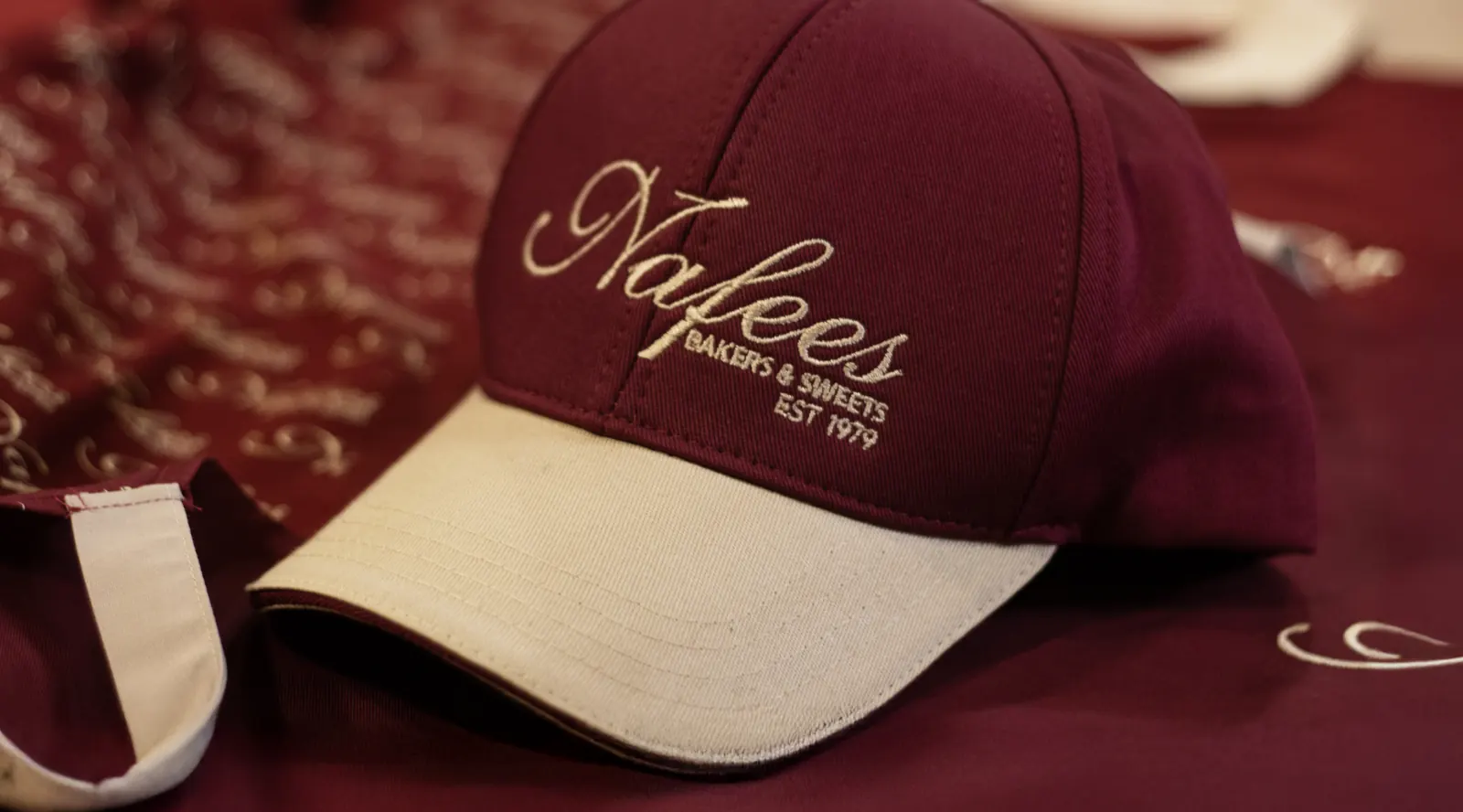
Left chest embroidery is the most common placement across hospitality garments. Cap fronts, sleeves and apron centres are also frequently branded. Embroidery is usually preferred on polos, aprons, chef wear and knitwear because it survives repeated commercial laundering. DTF transfers are more common on lightweight t-shirts where embroidery would feel heavy.
Looking for a hospitality uniform supplier in Yorkshire?
We’re BR Apparel, a Bradford-based uniform supplier working with hospitality teams across West Yorkshire. Our supplier page sets out how we handle production, branding consistency and repeat orders.
See how BR Apparel works