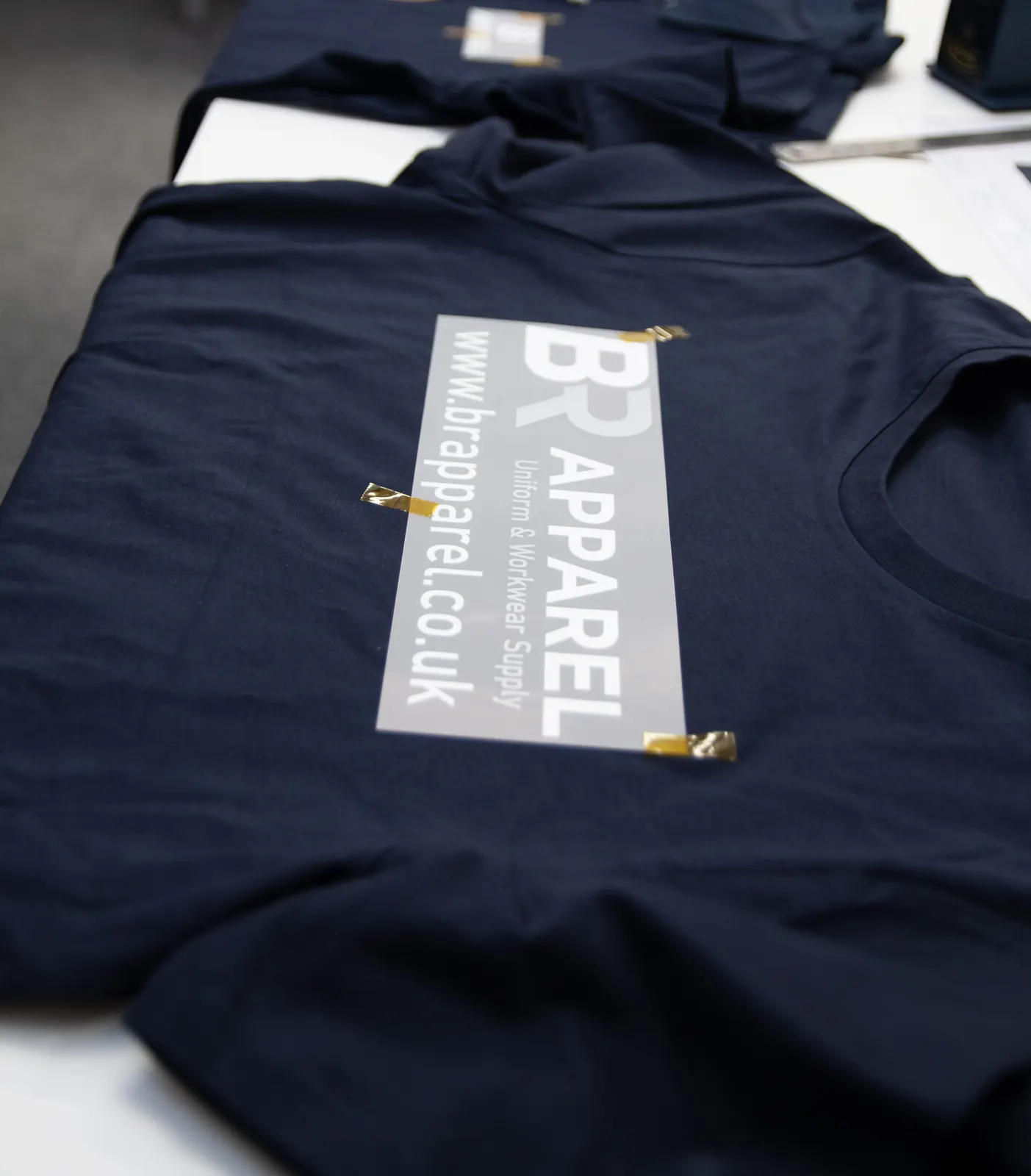
DTF Printing Bradford
Full colour logos on workwear, uniforms and technical fabrics, printed and pressed at our own facility in BD7.
DTF Printing in Bradford
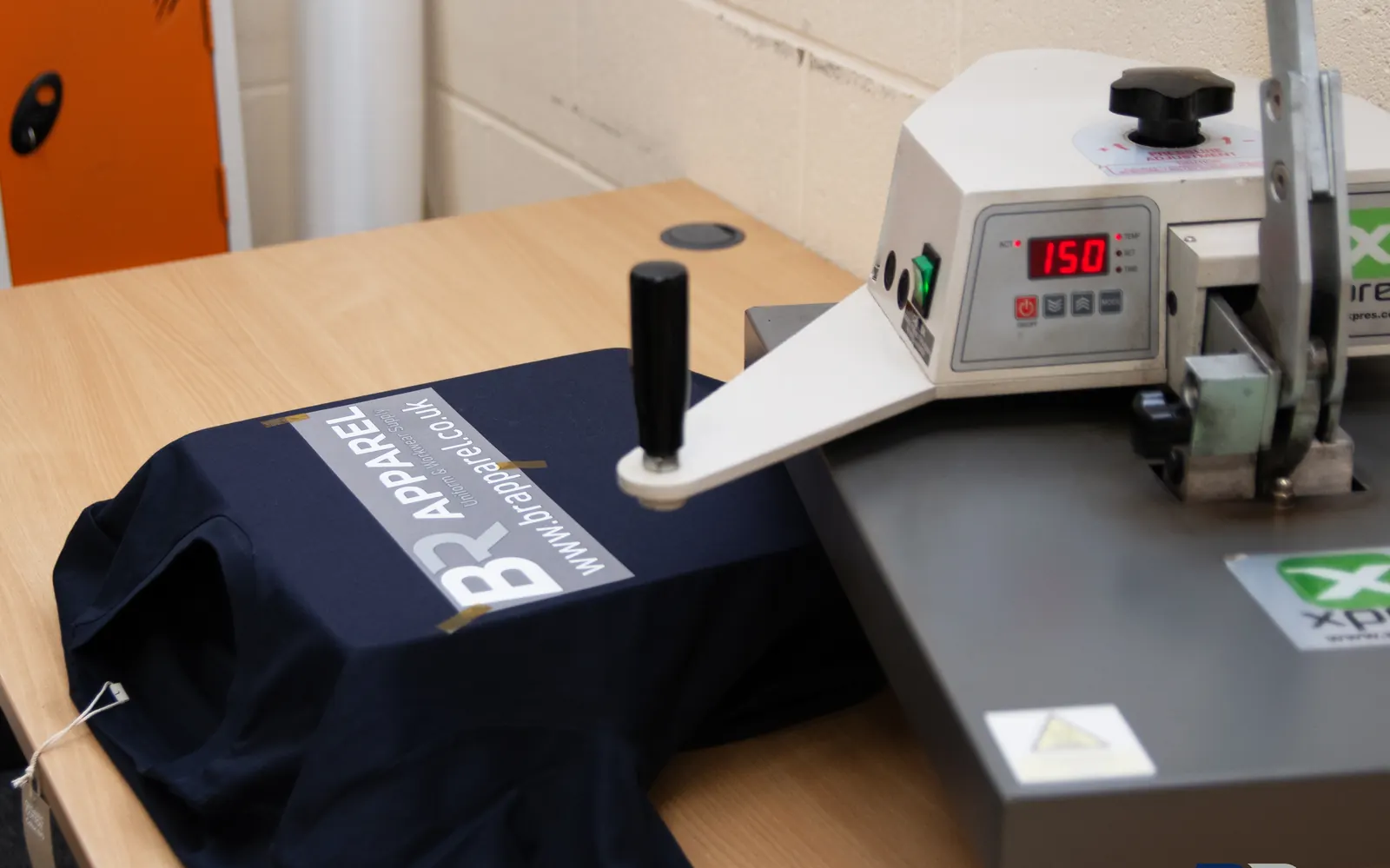
BR Apparel prints DTF transfers at our own facility at Unit 2 Great Russell Court, Fieldhead Business Centre, BD7 1JZ. The printing, the powder, the cure and the press all happen in the building, which is the reason we can hold a 4-5 working day turnaround rather than quote around somebody else's queue.
Most Bradford businesses that ask us about DTF are not shopping for a print method. They have a logo with four colours in it, a rail of polyester polos, or a waterproof jacket that nobody wants to put a needle through. DTF is the answer to those specific problems rather than a general purpose alternative to embroidery.
If you want the mechanics of how a transfer is made, the DTF printing guide walks through it stage by stage. This page is about when to choose it and what it will do on your garments.
Four Jobs Only DTF Can Do
We run embroidery, screen printing and DTF, and for a lot of workwear embroidery is still the right answer. These are the four situations where it is not, and where no amount of preference changes the fact that DTF is the only method that does the job properly.
Unlimited colour at no extra cost
Screen printing needs a separate screen for every colour, so a four colour logo costs four times the setup. DTF prints the whole design in one pass, which means gradients, photographs, fine detail and a full colour brand mark all cost the same as a single colour. If your logo has ever been simplified to make it printable, this is the method that stops that happening.
Technical fabrics without needle holes
Embroidery puts a needle through the garment several thousand times. On a softshell, a waterproof jacket or anything with a bonded membrane that is a problem, because every hole is a route for water. A heat pressed transfer sits on the surface and leaves the fabric intact, which is why DTF is the sensible choice for outer layers.
Every garment different, same setup
Because there is no screen and no digitised stitch file, changing the artwork between garments costs nothing. Names, job titles, site names, squad numbers and department variations can all run inside one order. On screen printing each variation is a new setup, which is what makes personalised runs expensive by any other method.
Small runs that still make sense
The minimum for DTF is 10 garments per design, and once we hold your artwork there is no minimum on re-orders at all. A single replacement top for a new starter is a normal order rather than an awkward one, and it comes back matching the batch it is joining.
Where a small chest logo goes onto a polo that is washed every working day, embroidery usually still outlasts a print, and we will say so. The embroidery versus printed logos comparison sets the two against each other properly.
Which Garments DTF Suits
DTF bonds to the surface of a fabric under heat and pressure, so the question is always whether the surface is flat, even and able to take the press. That rules two things out, and we would rather tell you before you order than after.
| Garment | DTF | What to know |
|---|---|---|
| Cotton and poly-cotton t-shirts | Good fit | The strongest use case. A solid white layer is printed behind the design, so colours stay bright on navy and black rather than going dull. |
| Polyester polos and wicking tops | Good fit | Prints cleanly on 100% polyester, where direct to garment printing tends to lose brightness. Common on driver, warehouse and summer kit. |
| Hoodies and sweatshirts | Good fit | Suits large chest and full back designs. The flat brushed face presses evenly, which is what a transfer needs. |
| Softshells and waterproof jackets | Good fit | The clearest case for printing over stitching. No needle holes through the fabric or any bonded membrane behind it. |
| Aprons, tabards and chef wear | Good fit | Polycotton drill takes a transfer well, and full colour matters more on hospitality kit than on most workwear. |
| Bags, totes and holdalls | Good fit | Canvas and polyester bag fabrics press well, and bags are usually where a full colour design earns its keep. |
| Hi-vis vests and jackets | With care | Technically straightforward, but placement is constrained by the garment certification. See the section below before you specify a print. |
| Caps and headwear | Use embroidery | Embroidery instead. A structured cap front is curved and seamed, so it will not take even pressure across a transfer. We run cap embroidery in house. |
| High pile fleeces | Use embroidery | Embroidery instead. The pile stops the transfer bonding flat to a surface, so the print sits on top of the fibres rather than into the garment. |
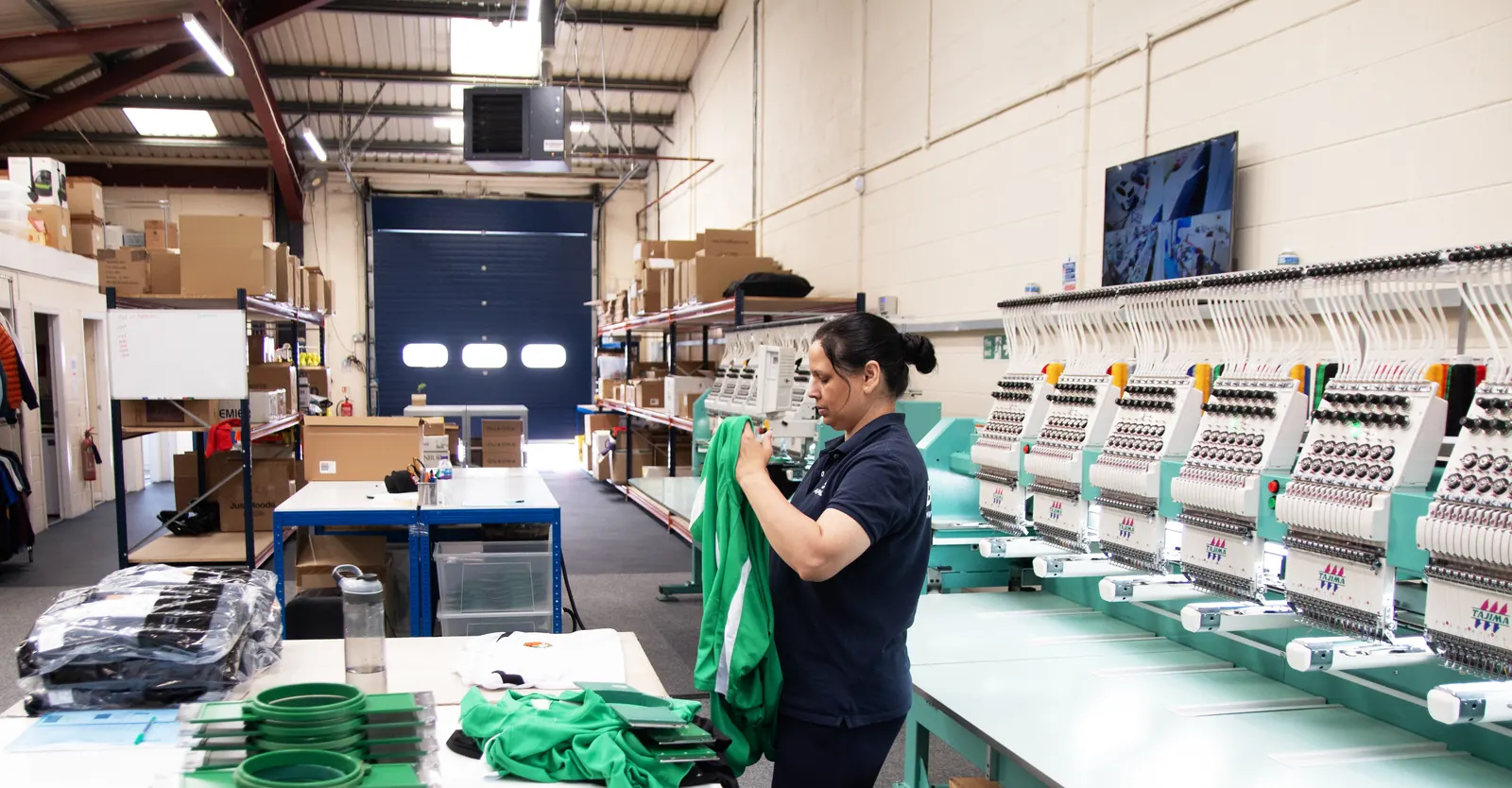
Mixed orders are normal and do not cost extra in lead time. An embroidered chest logo on the polos and a printed full colour design on the jackets is one job, produced in one building. We supply garments from several workwear ranges and will tell you which of them presses well.
Printing on Hi-Vis Without Losing Compliance
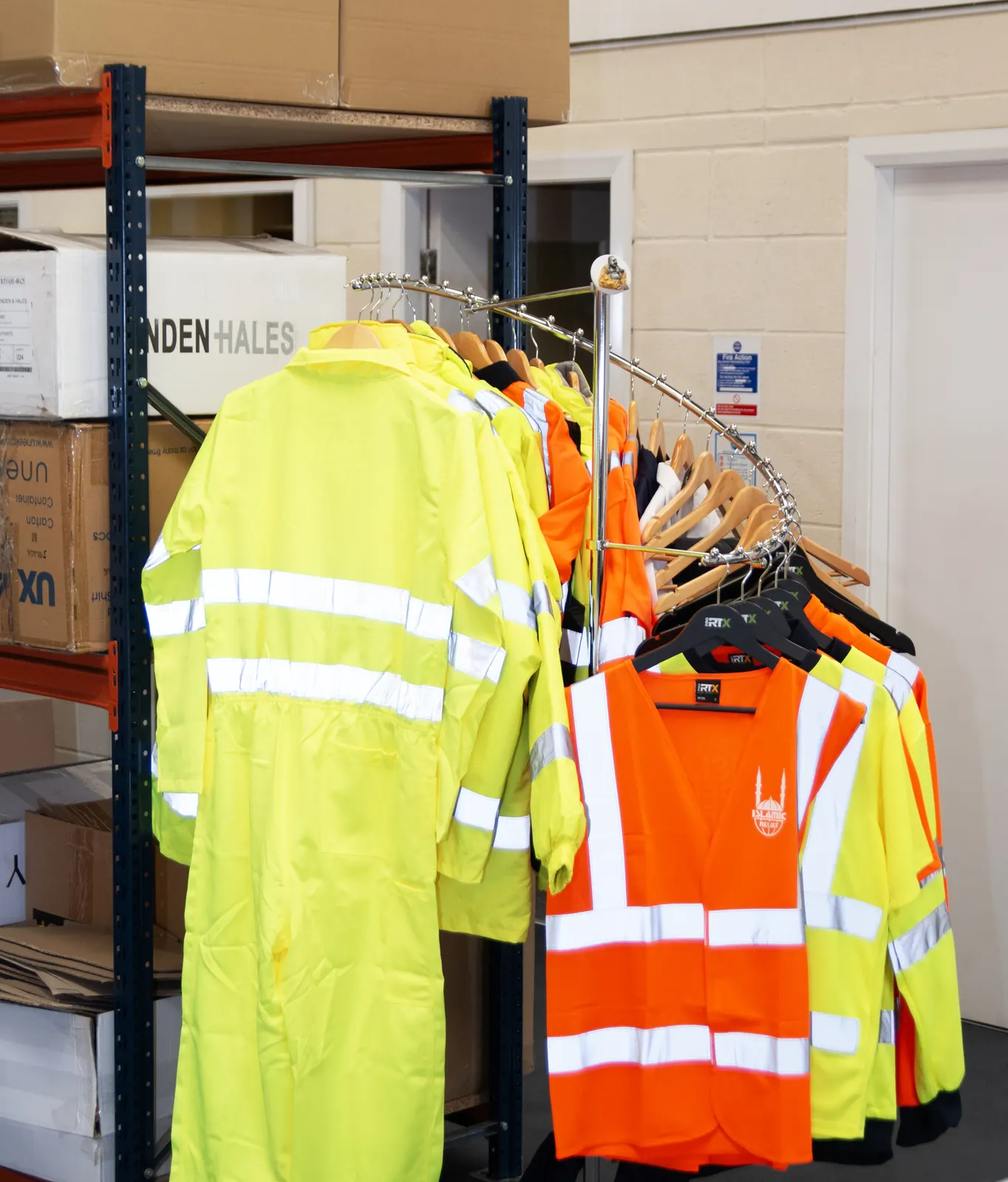
This is the part that gets missed. A hi-vis garment is certified to EN ISO 20471 on the basis of how much fluorescent background material and how much retroreflective tape it carries. Printing over either of those reduces the certified area, and a garment that no longer meets the standard is no longer doing the job it was bought for.
In practice it means the print goes where there is room for it rather than where the artwork looks best: sized to leave the background area intact, kept clear of the reflective bands, and usually placed on a contrast panel where the garment has one. On a Class 2 vest with a small torso there is genuinely less room than people expect.
Send us the garment and the artwork and we will come back with a placement that works. If it cannot be done inside the standard we will say that instead of printing it anyway. The hi-vis clothing guide explains how the classes and the minimum areas work.
Artwork That Will Print Properly
DTF reproduces exactly what it is given, which is a strength on a good file and unforgiving on a bad one. Almost every print job that stalls does so here. We check artwork before quoting and will tell you if a file will not hold up at the size you want, while there is still time to do something about it.
Send us these
- Vector files: AI, EPS, SVG or a vector PDF. Always the best starting point.
- PNG at 300dpi measured at the size it will be printed, with a transparent background.
- Pantone references or a previous garment if the brand colour has to match something.
- Layered files if the logo needs a version with the strapline removed for smaller placements.
These cause problems
- A logo copied from your own website. Screen images are a fraction of print resolution.
- A JPG with a white box behind the logo, which will press as a white box.
- Artwork supplied at 40mm that needs to print at 250mm across a back.
- A scan or photograph of a printed logo, which carries the paper texture with it.
If all you have is a low resolution logo, that is a normal starting point and not a dead end. Send what you have and we will tell you whether it can be redrawn. For how big the finished design should be and where it should sit on each garment, see the logo placement and size guide.
Lead Times, Minimums and Collection
Because production is in BD7, collection and direct delivery are both practical for Bradford businesses, and for anything urgent that matters more than the headline lead time. We print for trades, warehousing, manufacturing, hospitality and office teams across the city, and for businesses in Leeds, Halifax and Keighley.
You are also welcome to come and see a transfer pressed before you commit to a run. It is a five minute job and it settles most questions about finish faster than any description does.
- Minimum order, DTF print10 per design
- Minimum on re-ordersNone
- Turnaround from artwork approval4-5 working days
- Quote returned within24 hours
- Logo digitising feeEmbroidery only
- Colours in the designNo limit
Digitising is the one-off cost of turning a logo into a stitch file, so it applies to embroidery and not to print. For what branded garments cost per unit, see the uniform pricing guide.
Send Us the Logo
and the Garment
Tell us what you are printing on, how many, and roughly where you want the design. We will come back within 24 hours with a method recommendation, a placement and a price.
Request a QuoteDTF Printing Bradford FAQs
Common questions from Bradford and West Yorkshire businesses ordering DTF printed workwear.
- Yes. Printing, powdering, curing and pressing all happen at our own facility at Unit 2 Great Russell Court, Fieldhead Business Centre, BD7 1JZ. Nothing is subcontracted out, which is what lets us commit to a 4-5 working day turnaround from artwork approval rather than quote around a queue we do not control. Collection and direct delivery are both practical for Bradford businesses.
- Yes, and this is the clearest case for choosing print over embroidery. Embroidery puts a needle through the garment several thousand times, which on a waterproof or a membrane-backed softshell means several thousand routes for water to get through. A heat pressed transfer sits on the surface and leaves the fabric intact.
- Yes, and it costs no more in setup than printing the same design on all of them. There is no screen and no stitch file, so changing the artwork between garments is free. Names, job titles, site names, squad numbers and department variations can all run inside a single order, which is what makes DTF the practical method for personalised runs.
- Sometimes, and it depends on the garment. Hi-vis is certified to EN ISO 20471 on the basis of how much fluorescent background material and retroreflective tape it carries, so a print that covers either reduces the certified area. In practice the print has to be sized and placed to leave those areas intact and kept clear of the reflective bands. Send us the garment and the artwork and we will come back with a placement that works, or tell you if it cannot be done inside the standard.
- A vector file is always best: AI, EPS, SVG or a vector PDF. Failing that, a PNG at 300dpi measured at the size it will actually print, with a transparent background. The common problems are logos copied from a website, JPGs with a white box behind the design, and artwork supplied at 40mm that needs to print at 250mm across a back. We check artwork before quoting and will tell you if a file will not hold up at size.
- Yes, and it does not add lead time because both run in the same building. Mixed orders are normal: an embroidered chest logo on the polos and a printed full colour design on the jackets is one job. Where a small logo goes on a polo washed every working day we will usually recommend embroidery, and we will say so rather than print it because you asked.
- No, and we would not recommend anyone else does either. A structured cap front is curved and seamed, so it will not take even pressure across a transfer. Caps are an embroidery job and we run cap embroidery in house on the same site. High pile fleeces are the other exception: the pile stops the transfer bonding flat, so those are better embroidered too.
- It depends on the garment far more than the print, and the number of colours in your design makes no difference to the price because the whole thing prints in one pass. There is no digitising fee on print, as digitising is the one-off cost of turning a logo into a stitch file for embroidery. The minimum is 10 garments per design, with no minimum on re-orders once we hold your artwork. Send the garment, the quantity and the artwork and a quote comes back within 24 hours.