Hotel Uniform Supplier
Branded uniforms for every department in the building, from reception and housekeeping to the kitchen, the spa and the grounds team.
A Hotel Is Not One Uniform
It is the thing that makes hotels different from every other hospitality business we supply. A cafe has two groups of people to dress. A hotel has seven or eight, all under one roof, all seen by the same guest on the same day, and all needing to look like they work for the same building.
BR Apparel supplies and brands hotel uniforms from our own facility in Bradford, with embroidery and DTF run in house. We have been doing it since 2013 for independents, country house hotels, spa hotels and small groups across Yorkshire.
Most of the work is not choosing garments. It is deciding how eight departments can look deliberately different from each other while still reading as one hotel, and then making sure the set still matches in eighteen months when half the housekeeping team has changed.
Uniforms Department by Department
The fastest way to specify a hotel uniform is to work through the building rather than through a catalogue. This is the running order we use, and the last column is what tends to go wrong in each one.
| Department | Typical garments | Branding | What to watch |
|---|---|---|---|
| Reception and front desk | Poplin shirts or blouses, knitwear, tailored polos | Embroidery, left chest | Seen at close range across a desk for a whole shift, so collar shape and how the fabric creases matter more here than anywhere else in the building. |
| Housekeeping | Tunics or polos, tabards, aprons | Embroidery | The highest turnover team in most hotels and the hardest worn kit. Plan this one around re-orders and replacements, not around the first order. |
| Food and beverage | Polos or shirts, bib and waist aprons, waistcoats | Embroidery on the garment, or on the apron instead | An apron bib covers a left chest logo. Decide which layer carries the branding before you order both. |
| Kitchen and chefs | Chef jackets, chef trousers, aprons, skull caps | Embroidery, sized small | Goes through the hottest wash in the building. Garment weight and colourfastness decide how long it looks new. |
| Bar | Shirts, polos, waist aprons, knitwear | Embroidery | Often styled deliberately differently from restaurant staff, because guests use the difference to work out who to ask. |
| Spa and leisure | Tunics, polos, salon gowns, soft knit layers | Embroidery, sized small | Reads as clinical if you specify it like workwear. This is the group most often given the wrong fabric. |
| Maintenance and grounds | Polos, fleeces, softshells, work trousers, hi-vis where needed | Embroidery, or print on outer layers | The only group that goes outdoors in all weather, and the one most likely to be left off the uniform list entirely. |
| Management and duty managers | Knitwear, quarter zips, tailored shirts, softshells | Embroidery, left chest | Small group, usually specified last. Guests read it as the most senior uniform in the building, so it should not look like an afterthought. |
Front of house garments mostly come from the Premier range, which is built around aprons, chef wear, poplin shirts and tabards rather than adapted from a workwear catalogue. Maintenance and grounds teams usually end up in Regatta outerwear. Mixing ranges across one order is normal, because the brand that makes the best apron is rarely the brand that makes the best softshell.
Four Things That Are Different in a Hotel
These are not general hospitality points. They are the four that come up in almost every hotel conversation and almost no restaurant one.
Turnover decides the terms, not the first order
Housekeeping and food and beverage churn faster than almost any other sector. That makes the re-order terms the number that matters: the minimum here is 6 garments per design for embroidery and 10 for print, but there is no minimum at all on re-orders once we hold your artwork. One replacement tunic for a new starter is a normal order.
The uniform is wayfinding
A guest in a lobby needs to know who to ask, and they work it out from what people are wearing before they read a badge. That is an argument for departments looking deliberately different from each other, while the logo, thread colours and palette stay identical so the whole thing still reads as one hotel.
Eight groups, one brand, one order
The failure mode is not a bad garment, it is drift: reception ordered in March, housekeeping in July from a different supplier, and now there are two navies. We hold the artwork, thread colours, garment codes and sizing on record for every department, so the set stays consistent across a year of separate orders.
The groups nobody specifies
Maintenance, grounds, night porters and duty managers are the four most commonly forgotten. They are also the ones guests see at the least forgiving moments, which is a reason to specify them at the start rather than in a rush later.
Ask the Laundry Question First
Hotels are the one hospitality business that usually already runs an industrial laundry, for linen if nothing else. Whether uniforms go into it or go home with staff is the single question that changes the specification most, and it is the one most often left until after the garments are chosen.
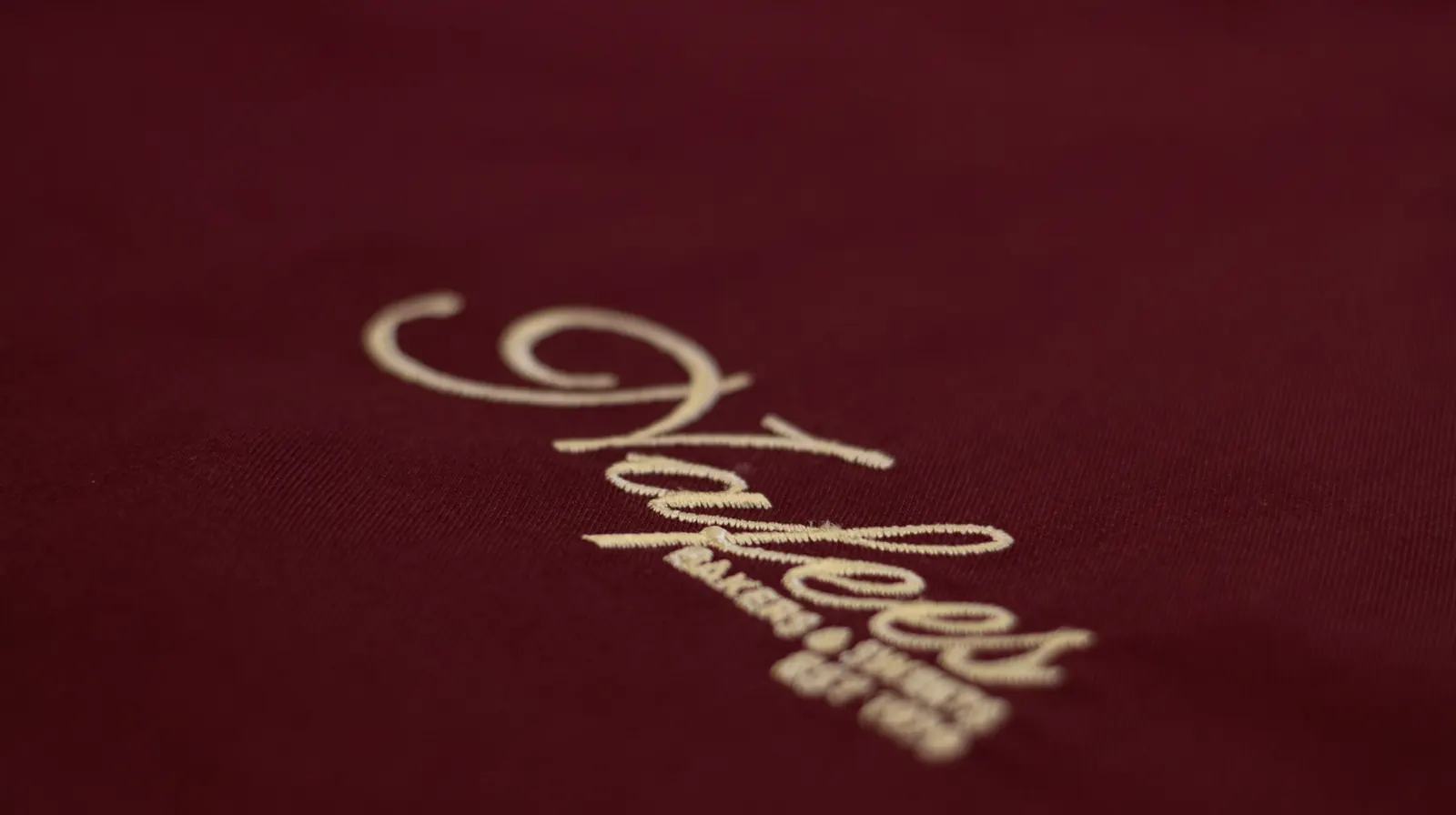
- Embroidery survives industrial laundering better than most printed branding, which is why it is the default on anything going through your own laundry
- Ask whether uniforms will actually go through the hotel laundry or home with staff, because the answer changes the garment, not just the wash label
- Polyester-rich fabrics hold colour and shape through repeated hot washes better than heavy cotton
- Chef whites and kitchen kit take the hardest cycle in the building, so specify those on durability rather than on price per unit
- If a garment is going to be pressed flat every day, a printed transfer is the wrong choice and we will say so
A lot of hotels arrive at this page already renting their uniforms weekly, because rental bundles the laundering in. We supply garments to own rather than to rent, and our rental versus buying comparison works through what three years costs either way, including the cases where renting is genuinely the better answer.
Hotel Groups and Multiple Properties
Across more than one property the problem stops being supply and becomes control. Each general manager has a reason to order something slightly different, and after two years the group has four versions of its own uniform. These five things prevent it.
- One agreed garment list per department, held on file so no site can quietly substitute
- Split delivery to individual properties, or consolidated to one address
- An online ordering portal so general managers order only from the approved range
- Central visibility of what each property is spending
- Sizing sessions on site, which for anything over about twenty people beats a size chart
The portal is the part that does the most work of the five, and there is no charge for it. See online uniform ordering for how it is put together.
How We Work With Hotels
Production is at Unit 2 Great Russell Court, Fieldhead Business Centre, BD7 1JZ, which puts us inside an hour of most of Yorkshire. We supply hotels in Harrogate, York, Leeds and Wharfedale, where the spa and country house trade is concentrated.
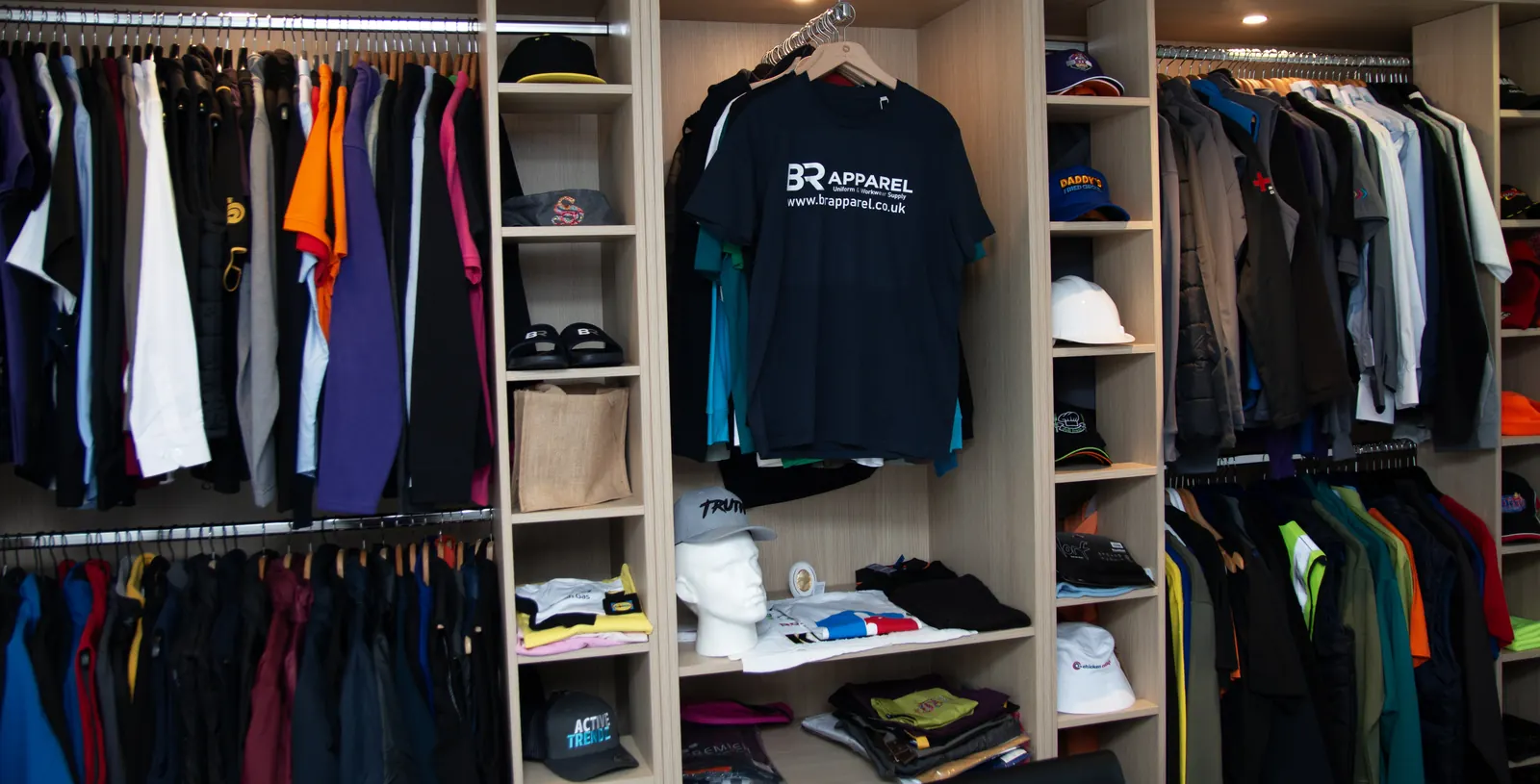
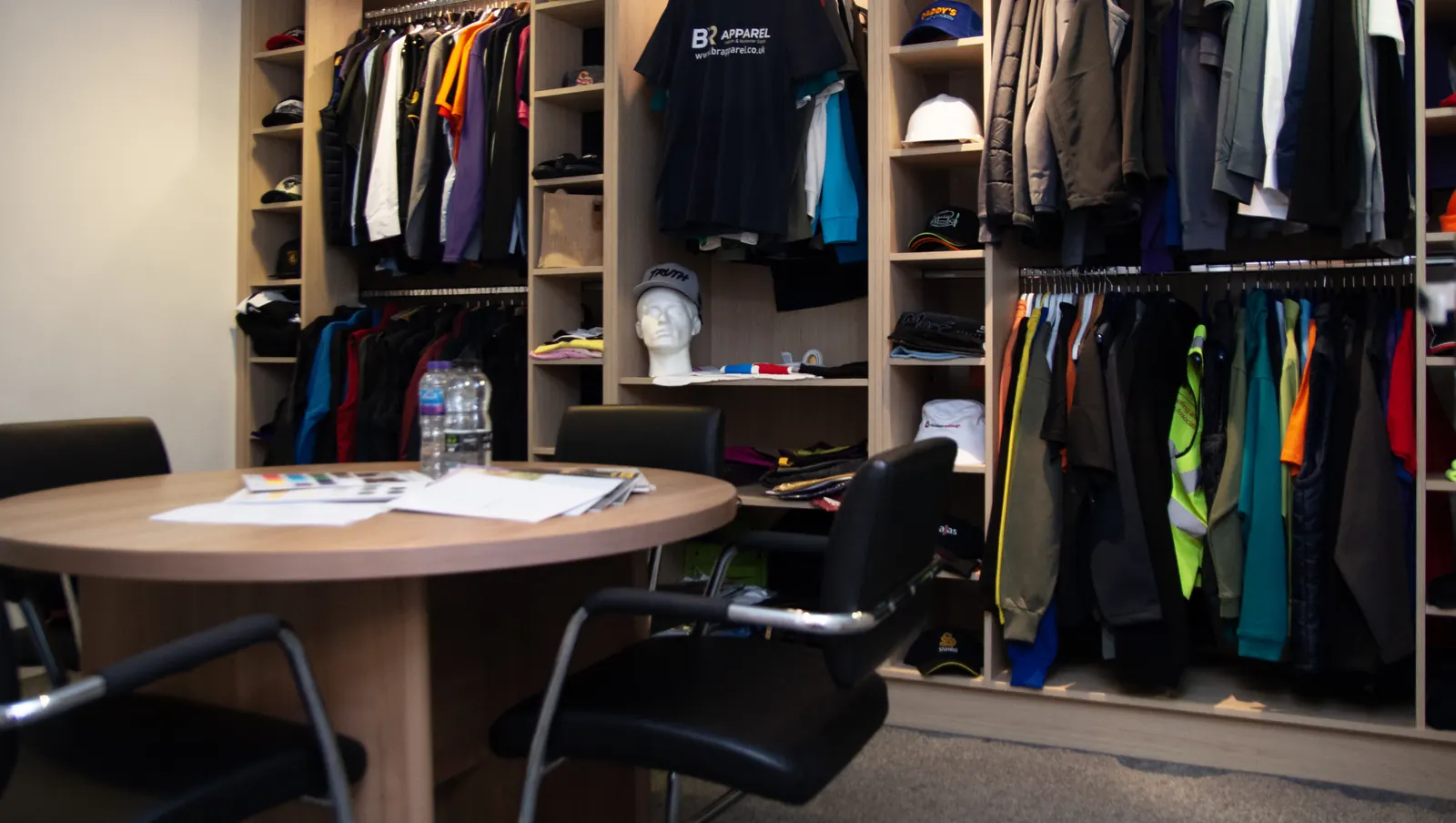
You are welcome to visit and handle the garments before deciding. For a hotel specifying eight departments at once, an hour with the samples on a table saves more than any amount of emailing.
- Minimum order, embroidery6 per design
- Minimum order, print10 per design
- Minimum on re-ordersNone
- Turnaround from artwork approval4-5 working days
- Quote returned within24 hours
- One-off logo digitising£15
For what the garments cost per unit see the uniform pricing guide, and for hospitality supply generally, including restaurants, cafes and bars, see hospitality uniform supply.
Tell Us the Departments
and the Headcount
Send us the teams you need to dress and roughly how many in each. We will come back within 24 hours with garments per department, a branding recommendation and a cost per head.
Request a QuoteHotel Uniform FAQs
Common questions from hotels and hotel groups specifying uniforms across several departments.
- Yes, and that is normally the whole point of the conversation. Reception, housekeeping, food and beverage, kitchen, bar, spa and leisure, maintenance and grounds, and management all get specified separately, then branded identically so the building reads as one hotel. Maintenance, grounds, night porters and duty managers are the four groups most often left off the list, and they are the ones we ask about first.
- By letting the garments differ and keeping everything else fixed. Guests use visible differences between departments to work out who to ask, so reception and housekeeping should not be interchangeable. What stays identical is the logo, the thread colours and the palette. We hold artwork, thread references, garment codes and sizing on record, which is what stops reception ordering in March and housekeeping ordering in July ending up as two different navies.
- Embroidery holds up to industrial laundering better than most printed branding, which is why it is our default on anything going into a hotel laundry. The question we ask first is whether uniforms actually go through your laundry or home with staff, because the answer changes the garment rather than just the wash label. Polyester-rich fabrics keep colour and shape through repeated hot washes better than heavy cotton, and if a garment will be pressed flat daily we will tell you a printed transfer is the wrong choice.
- No. We supply and brand uniforms for the hotel to own, and we do not launder them. Plenty of hotels come to us already renting weekly, because rental bundles the laundering in, and our rental versus buying page compares the two over three years and is straight about the cases where renting is still the better answer.
- Six garments per design for embroidery and ten for print, and you can mix sizes within that. The figure that matters more in a hotel is the re-order minimum, which is none once we hold your artwork. Housekeeping and food and beverage turn over faster than almost any other sector, so one replacement tunic for a new starter needs to be a normal order rather than an awkward one, and it comes back matching the batch it is joining.
- Yes. Across more than one property the problem stops being supply and becomes control, because every general manager has a reason to order something slightly different. We set one agreed garment list per department and hold it on file, deliver either to individual properties or consolidated to one address, and can put an online ordering portal in place so managers order only from the approved range with the spend visible centrally.
- Front of house garments mostly come from the Premier range, which is built around aprons, chef wear, poplin shirts and tabards rather than adapted from a workwear catalogue. Maintenance and grounds teams usually end up in Regatta outerwear. Mixing ranges across a single order is normal, because the brand that makes the best apron is rarely the brand that makes the best softshell.
- Production runs 4-5 working days from the point artwork is approved, and a quote comes back inside 24 hours. Sizing is the part worth slowing down for: for anything over about twenty people we would rather come to the property and run a sizing session than have you work off a size chart, because a chart is not a fit and getting it wrong is the most common reason a rollout fails. You are also welcome to visit us in Bradford and handle the garments first.