Article
A founder emailed us last week about his order. He wanted DTF, he said, because it is the one where the print becomes part of the fabric and sits completely flush.
He had it backwards, and almost everybody does.
It is worth explaining properly, because choosing the wrong one is how a first collection ends up looking tired after a month.
What each one actually is
Screen print is ink pushed through a mesh screen onto the garment. With water-based and discharge inks, that ink goes into the fibres and dyes them. The design becomes part of the cloth. Run your hand over a good water-based print and you can barely feel it.
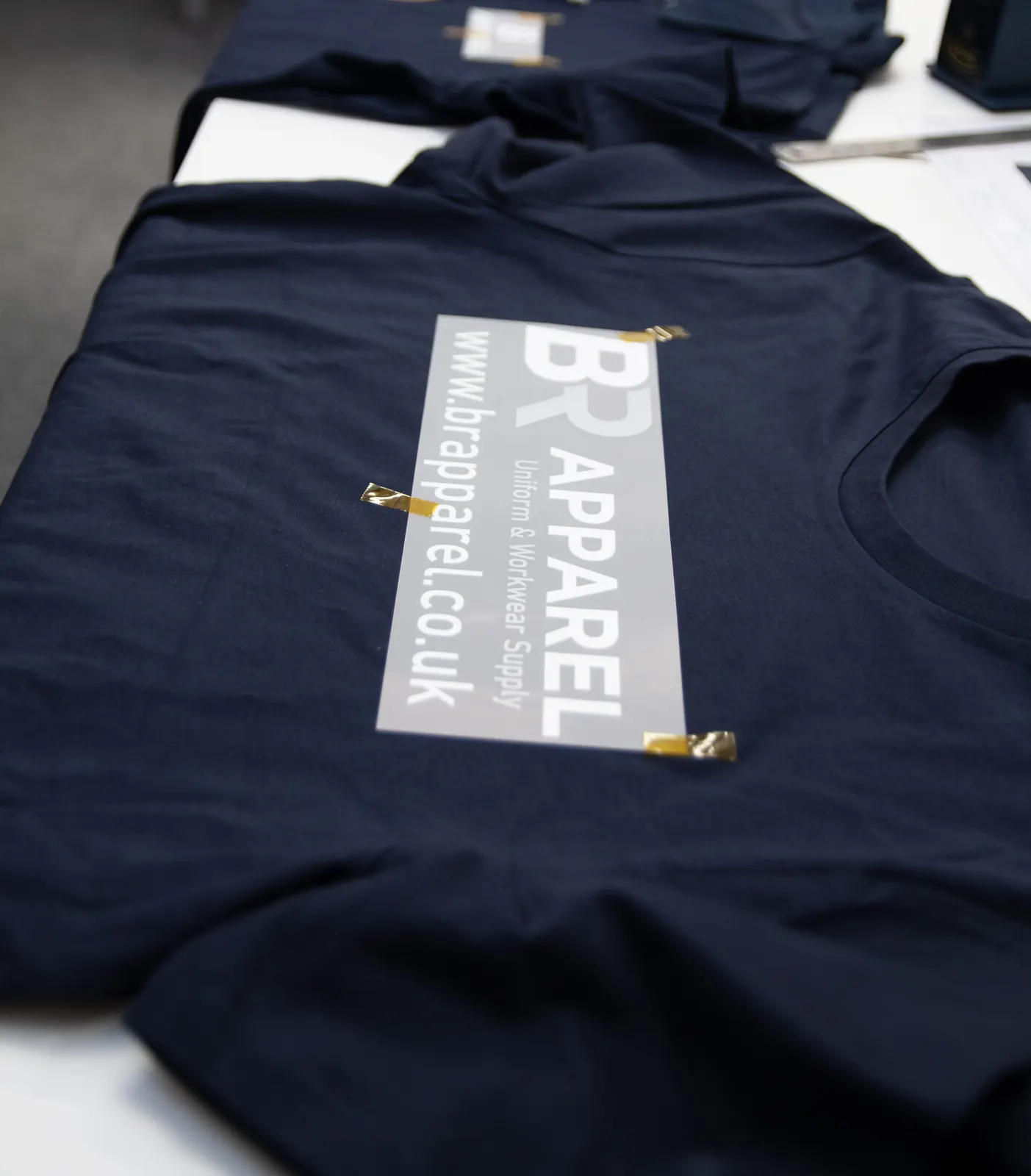
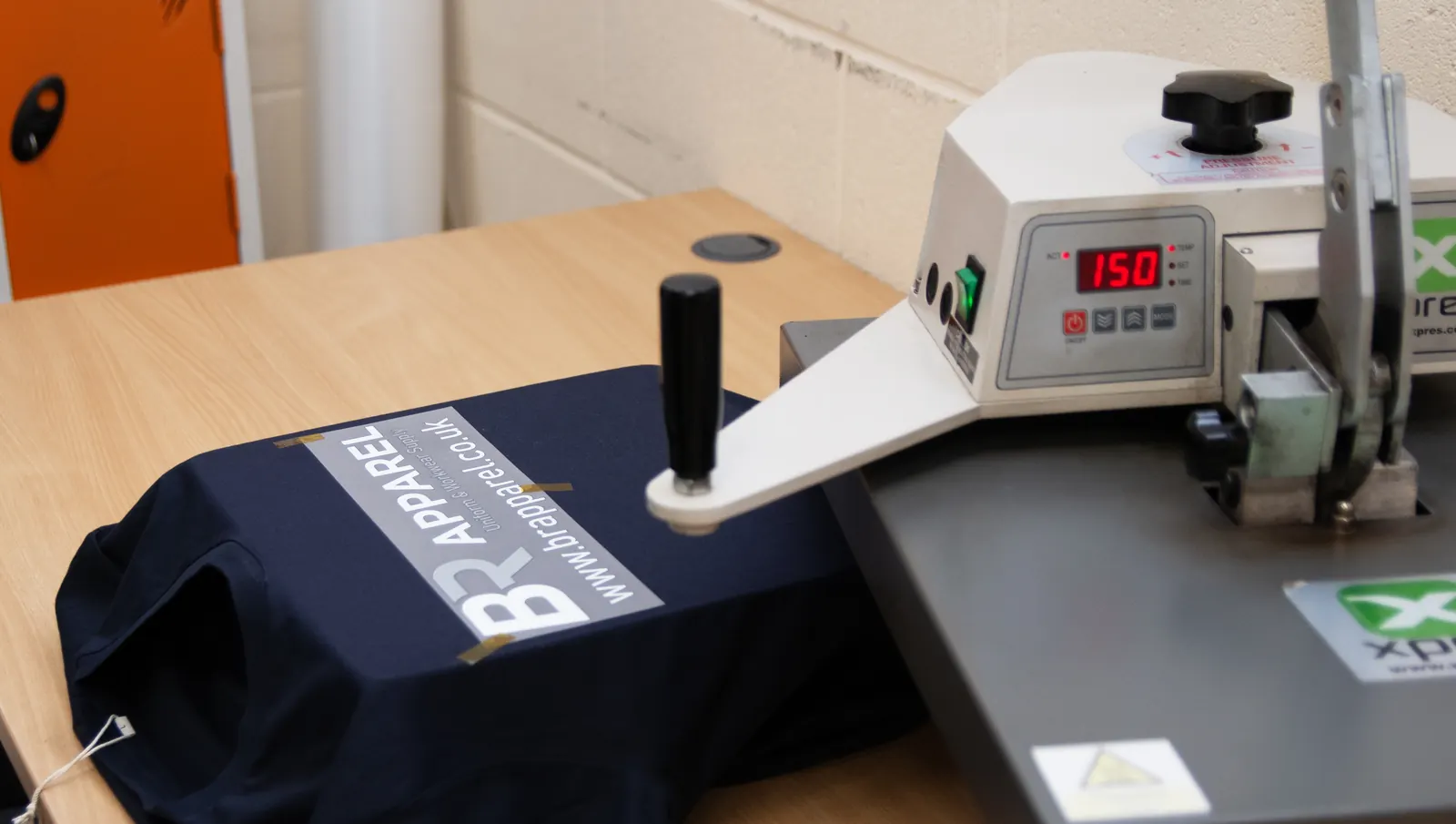
DTF stands for direct to film. Your artwork is printed onto a sheet of film, coated with an adhesive powder, and heat-pressed onto the garment. It is thin, soft and flexible, but it is a layer sitting on the surface, bonded to it.
Both are good. They are simply not the same thing, and the flush, no-feel finish people describe is screen print, not DTF.
Which one lasts longer
Screen print. A properly cured water-based print can outlast the garment. We have seen tees where the fabric has gone soft and thin and the print is still perfect.
DTF, pressed correctly with decent film, holds up to around 40 to 50 washes before it starts to lose depth.
They fail differently, which matters more than the numbers. Screen prints crack. After enough washes and enough stretching, the ink film breaks up and you get that vintage cracked look, which some brands actually want. DTF fades. It stays flexible and intact but gradually loses saturation.
For most fashion brands, 40 to 50 washes is more than enough. Nobody washes a graphic tee fifty times in a season.
But if your customers are washing kit after every session, gym wear, combat sports, workwear, screen print is the safer bet. Those are the buyers who will notice.
Which one costs less
It depends entirely on quantity, and the crossover is around 50 to 100 garments.
Screen print carries a set-up cost. Every colour in the design needs its own screen making, and every screen is charged. A four-colour design on a dark garment needs five screens once you count the base white. That set-up gets spread across the run, so at 500 garments it is nothing per unit, and at 20 garments it is most of the cost.
DTF has no set-up at all. No screens, no originations. That means six different designs cost exactly the same as one, which is why it suits small runs and brands testing several ideas at once.
Rough rule: under 50 garments, DTF. Over 100, screen print. Between the two it depends on how many colours are in the design. How we normally run it, and why the switch happens at 100, is on our decoration page.
Which one handles your artwork
This is where the decision usually gets made for you.
DTF handles anything. Full colour, gradients, photographs, drop shadows, fine detail, unlimited colours. If your design has a photographic element or a fade, screen print is not an option.
Screen print is spot colour. Flat, solid areas. Up to eight colours on white garments and six on dark. Gradients can be faked with halftone dots but it rarely looks intentional on a garment.
If your logo is one or two solid colours, screen print will look sharper and last longer. If your artwork is a detailed illustration or a photograph, DTF is the only honest answer. If it is a chest logo on a premium garment, embroidery is the third option, and often the right one.
A thing worth knowing about dark garments
Printing onto black or navy with screen print needs a base white: a layer of white ink laid down first so the colours on top read properly. Without it, red on black comes out brown.
That base white counts as an additional colour. So a one-colour design on a black tee is really a two-colour job, with two screens and two originations.
We quote every screen print job with the base white included, so the price holds whatever colour you choose. Not everyone does. If you are comparing quotes, check whether it is in there. It is a common way for a cheap-looking quote to get more expensive later.
DTF carries its own white base as part of the transfer, so the price is the same on any garment colour.
So which should you choose
| Choose screen print | Choose DTF | |
|---|---|---|
| Quantity | 100+ | Any, especially under 50 |
| Artwork | One to six solid colours | Full colour, gradients, photographic |
| Feel | In the fabric, no-feel finish | Soft film on the surface |
| Durability | Can outlast the garment | 40 to 50 washes |
| Set-up | Per colour, per design | None |
| Multiple designs | Each one costs extra | No extra cost |
In practice:
- A streetwear brand doing 200 hoodies with a two-colour back print: screen print, comfortably.
- A founder testing six designs across 30 tees to see what sells: DTF, without question.
- A gym or combat sports brand whose customers wash kit constantly: screen print, because those buyers will notice the difference in month six.
- A brand with a detailed illustrated graphic: DTF, because screen print cannot reproduce it.
What we would tell you
We do both, in our own way, and we have no reason to push you toward either.
What we will do is tell you which one suits your job, including when that is the cheaper option. A client who gets sold the wrong finish does not come back, and we would rather have the reorder than the extra thirty pounds.
If you are not sure, send us your artwork and tell us the quantity. We will tell you which way to go and why. The garments we supply are listed with every weight, and the enquiry form takes your artwork with it.