Article
Your second order is cheaper than your first because most of the one-off work is already done and paid for. Your labels are made, your artwork is approved, and your embroidery file is digitised, so none of that is charged again. What a reorder is not is quicker: it takes the same time as the first run.
That is worth understanding before you place the first order, because a few decisions at the start decide how much the second one saves you. Here is what carries over, what does not, and the one detail about screen print that is easy to get wrong.
Your labels are already made
Woven labels are made to order at 100 per design. That is the label maker’s minimum, not ours. On a first run of 25 garments you pay for 100 labels and use 25. The rest are held at no cost and carried into your next run, so a second order of 25 goes out with labels you have already paid for. Printed care labels and swing tickets run at the same 100 per design, so the same applies to them.
Your artwork is approved
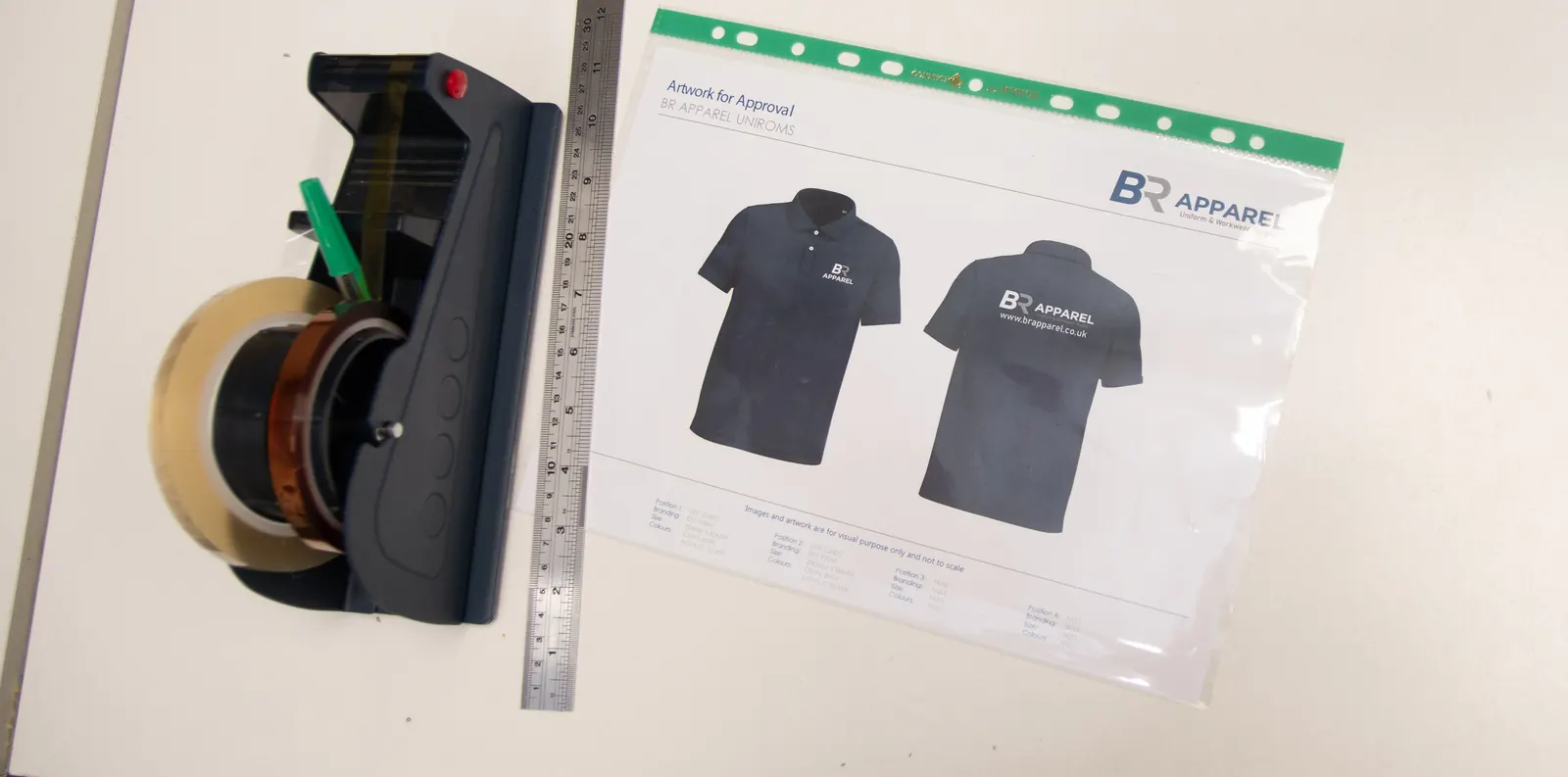
Before a first order goes into production we prepare your artwork, issue visual proofs and confirm the label folds, tag sizes and print placement, and nothing is made until you approve it in writing. If your logo arrived as a JPG and had to be rebuilt as vector, that file now exists. The vector file and the digitised file are your property and available on request at any time.
The decisions are made too. You have chosen the garment and the weight, the fold of the label, where the print sits and which method suits it. You have held a sample. A first order is where the expensive thinking happens, and a reorder on approved artwork does not repeat it.
Your embroidery is digitised once
Embroidery is the one method where set-up is genuinely paid once and never again. Once your design is digitised, the stitch file is fixed. The same file gives the same result every time, with no batch variation and nothing to change on a reorder. Digitising is charged once and held, so every run after that carries no set-up at all.
Screen print: the film is kept, the screens are not
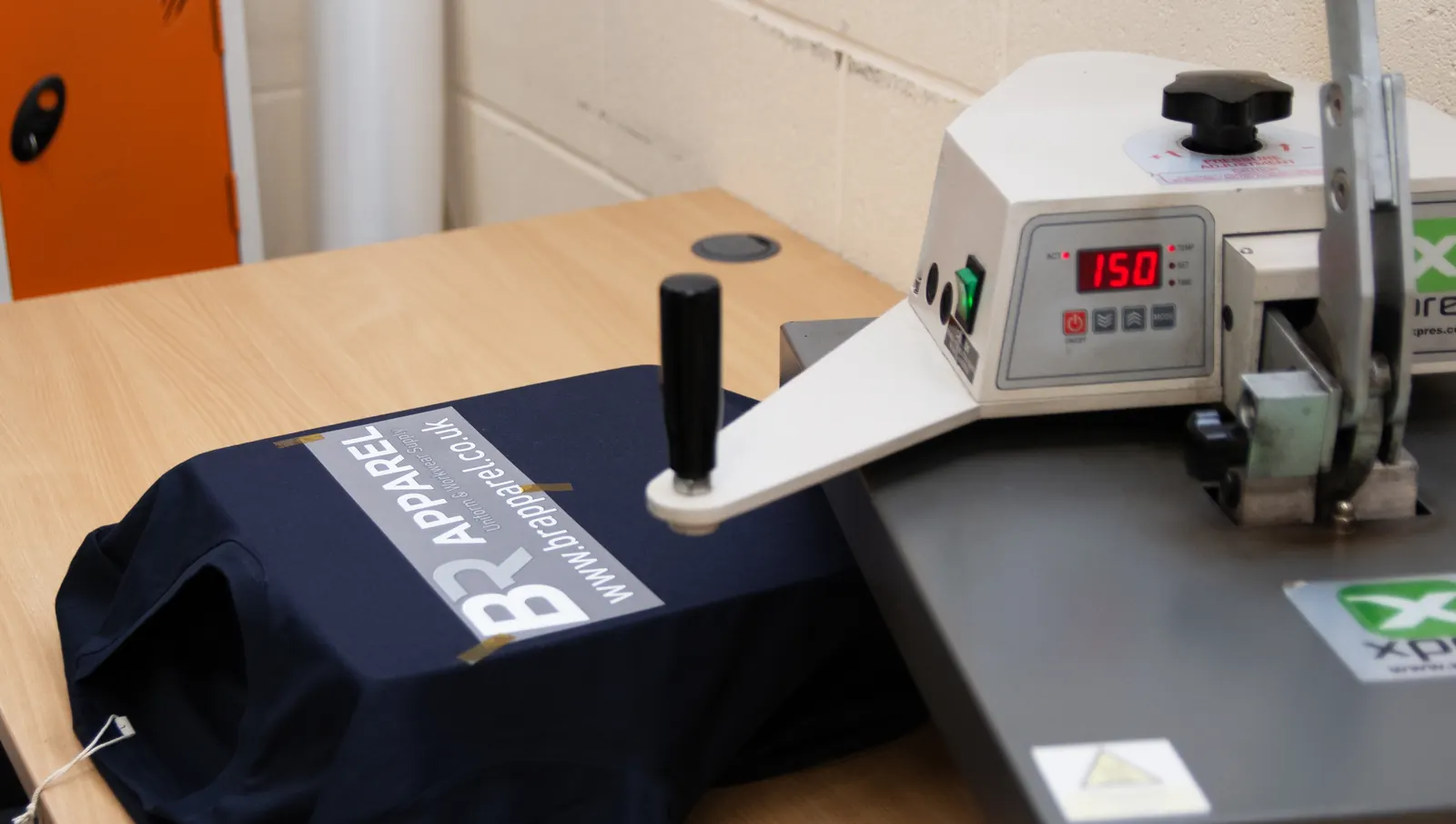
This is the part that gets misquoted. For screen print, your film is made once and held, so a screen print reorder comes from the same original and matches your first run. The screens themselves are made fresh for every run, from that same film. Only the film is kept.
What that means for the bill depends on quantity. At 100 or more per design, the screen set-up is included, so it is not a line on your reorder at all, and screen print costs less per print than DTF. Below 100, a set-up is charged on every order, whether it is your first or your fifth, which is why we normally keep smaller runs on DTF. DTF has no set-up at all, so a DTF reorder never carries one.
The 100 is per design, not per garment type, and colours mix freely. Sixty tees and forty hoodies carrying the same print counts as one hundred. A second order is usually bigger than the first, because something sold, and that is often the point a brand crosses 100 on its main design and moves to screen print. The way we run it is on the decoration page.
“Films are made once and held. Screens are remade for every run.”
Quantity helps as well
The garment is the biggest single line on any quote. It is priced from our trade cost with a markup that falls as quantity rises. So if your reorder is a deeper run of the style that sold, the garment line comes down too, on top of the set-ups you are no longer paying for.
What does not get cheaper
To be straight about it, some things cost the same every time:
- The garment itself at the same quantity. A 350gsm Cruiser 2.0 hoodie (STSU177) is the same blank on the second order as on the first, and 25 of them is still 25 of them.
- Decoration, which is priced per position per garment.
- Finishing: relabelling, swing ticket application and bagging are charged per garment, every run.
- A screen print set-up below 100 per design, because the screens are remade.
- Anything you change. A new brand name means new labels. A new print design is a new set-up, and a new embroidery design is new digitising.
Samples are chargeable and are not credited against a later order either, so the sample you paid for on the first drop does not come back as a discount on the second. It is already doing its job: it is the reason the second order needs no new decisions.
Cheaper, not quicker
Reorders on approved artwork take the same time as the first run: four to six weeks from artwork approval. Woven labels take 7 to 10 working days from the label maker on new and repeat orders alike, and every reorder goes through decoration, relabelling and finishing just as the first did. We would rather quote you the real time than promise a shortcut. If a style is selling through, plan the reorder before it sells out.
How to make the second order as cheap as it can be
- Keep the label design. The spares from your first run are already paid for.
- Keep the print design, and use it across garment types where it makes sense. Tees and hoodies carrying the same print count together toward 100.
- Reorder the garment that sold, deeper, rather than opening a wide new range on the second drop.
- Stay on the same blank. The same style code means the same fabric, weight and fit every run.
Where to go next
What drives each line of a quote is on the pricing page, and the first-order minimums are set out in minimum order quantities explained. If you are still choosing the garment that everything else hangs on, start with the hoodies and t-shirts. When you are ready, get your first drop quoted.