
Article
A minimum order quantity, or MOQ, is the smallest run a supplier will make of something. The catch is that a clothing brand has several of them, one at each layer: the garments, the labels, the decoration and, if you go overseas, the factory. For an own label first drop with us, the garment minimum is 25, with mixed styles counted together, and the labels run at 100 per design.
Founders usually ask for one number. It is a fair question, but a finished garment is made of parts that come from different places, and each part has its own floor set by whoever makes it. Here is every layer, what the number is, and what it means for your first drop.
Every minimum on one page
| Layer | Minimum | What it means |
|---|---|---|
| Garments with your own label | 25, mixed styles counted together | The minimum for relabelling and finishing, not 25 of one style |
| Garments without your own label | Below 25 is fine | Print or embroidery only, no own label |
| Woven labels | 100 per design | The label maker’s minimum. Spares are held for your next order |
| Care labels and swing tickets | 100 per design | The same run as the woven labels |
| Embroidery | No unit minimum | A minimum order value applies instead |
| Branded packaging | 1,000 | Made to order, 4 to 6 weeks |
| Samples | One garment | Chargeable, and not credited against a later order |
| Overseas cut and sew | Typically 100 per style, per colour | Plus fabric minimums of hundreds of metres |
The garment minimum: 25, mixed
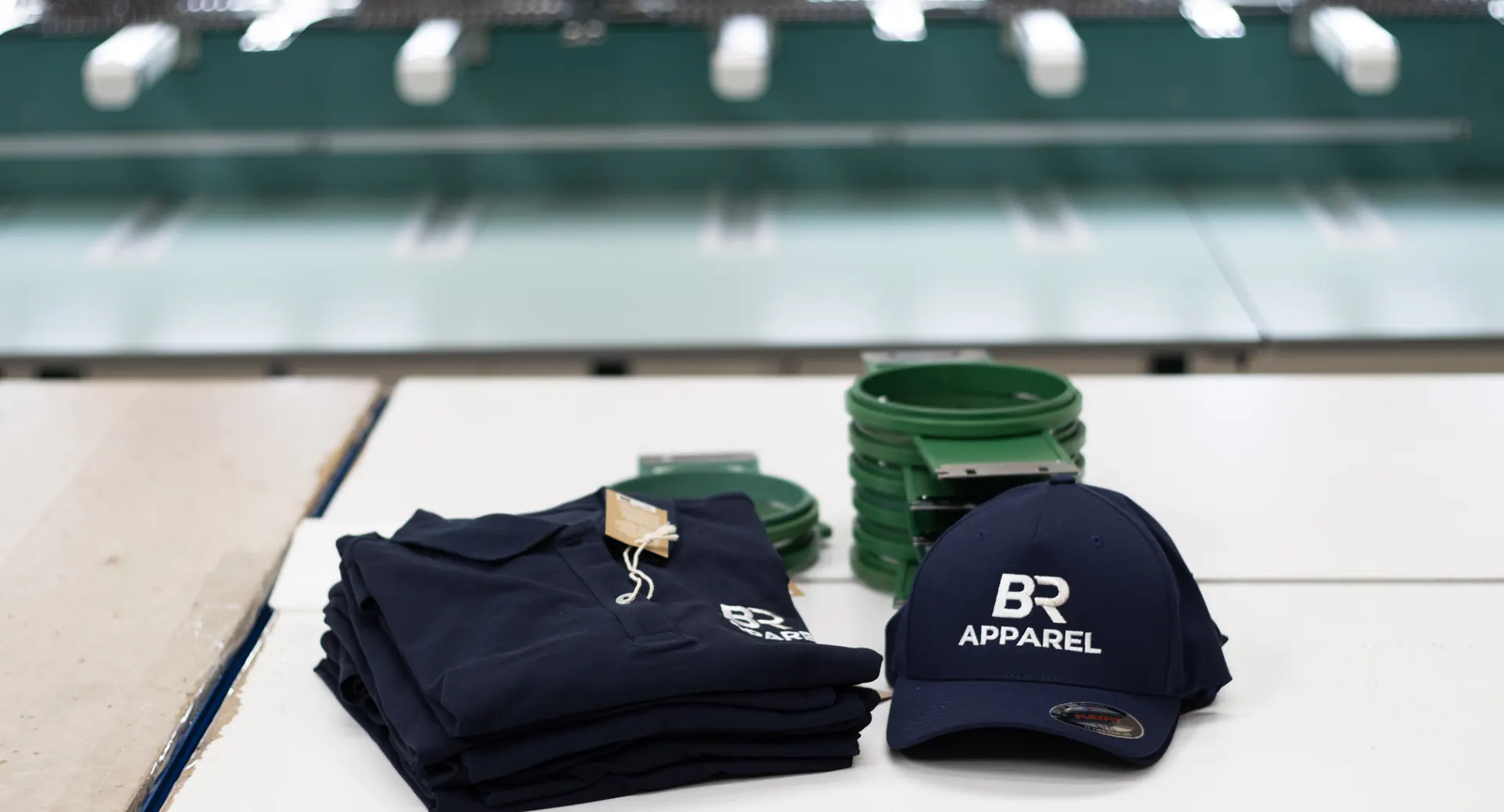
25 is the minimum for your own label. That covers relabelling and finishing: the supplier label comes out of the neck, your woven label goes in, a printed care label and a swing ticket are added, and every garment is bagged ready to sell. Mixed styles count together toward the 25, and sizes mix inside the count as well.
So 10 t-shirts, 10 hoodies and 5 sweatshirts is a first drop. In real styles that might be ten Stanley/Stella Creator 2.0 tees (STTU169) at 180gsm, ten Cruiser 2.0 hoodies (STSU177) at 350gsm and five Changer 2.0 crews (STSU178) at 350gsm. Three products, one label in all of them, and it counts as 25. The codes and weights for every style are on the t-shirt, hoodie and sweatshirt pages.
Below 25 we can still print and embroider for you. What you cannot have on that quantity is your own label, because the labels themselves start at 100 per design. If you are testing a single design on 15 tees, that is a perfectly good order. It just leaves the supplier’s name in the neck.
Why mixed styles counting together matters
The other kind of minimum most founders have been quoted is per style and per colour: 100 of one tee in one colour before anything gets made. Under that rule, the drop above is 300 garments at the very least, and 600 if each of the three styles comes in two colours.
Counted together, it is 25. That is the difference between testing three products and betting everything on one. A first drop has one job, which is finding out what sells. Spread it across the styles you believe in, see which one goes, and put the money into that one on the reorder.
“A first drop has one job, which is finding out what sells.”
The label minimum: 100 per design
Woven labels are made to order at 100 per design. That is the label maker’s minimum, not ours. On a first run of 25 you pay for 100, and the remaining labels are held at no cost and carried into your next order. Printed care labels and swing tickets run at the same 100 per design.
The words that matter are per design. A second placement, say a small woven label on the sleeve as well as the one in the neck, is a second label design, which means a second run of 100. Most brands relabel the neck and stop there. The fold types and positions are on the own label page.
Woven labels take 7 to 10 working days from the label maker, on new and repeat orders alike. They run alongside production rather than adding to it, so the label minimum costs you money up front but not time.
Decoration has its own rules
Embroidery has no unit minimum. We sample from a single garment. A minimum order value applies, because the set-up takes the same time whatever the quantity, and digitising your design is charged once and held for every run after that.
Print works differently. Samples, first runs and anything under 100 normally go on DTF, which has no set-up at all. At 100 or more per design we move you to screen print, where the screen set-up is included. That 100 is not a minimum. If you want screen print on a smaller run because you prefer the finish, we will quote it with the set-up charged, and tell you honestly when DTF would cost you less. The 100 is also per design, not per garment type: sixty tees and forty hoodies carrying the same print counts as one hundred. The full reasoning is on the decoration page and in DTF or screen print.
Overseas cut and sew: 100 per style, per colour
Overseas cut and sew is typically 100 per style per colour, and the fabric carries its own minimum of hundreds of metres. Three styles in two colours is six lots of 100 before you have sold a single garment. That is genuine manufacturing, to your own pattern, and there is a point where it is the right call. We set out where that point is in UK or overseas, honestly compared.
Two minimums people forget
- Branded packaging is 1,000, made to order on a 4 to 6 week lead time. It needs starting well before the garments, so if boxes or tissue are part of your launch, tell us early.
- Samples run from one garment, so you can hold the real thing before you commit to 25. They are chargeable and are not credited against a later order.
Planning a first drop around the minimums
- Decide the products first, then the split. The 25 is a total across styles and sizes, not a number per product.
- Use one label design across everything. The 100 then covers your first 25 garments and the next 75, across every style.
- If screen print is where you are heading, keep the same print across tees and hoodies. They count together toward the 100.
- Sample before you order the run. One garment in your hand settles more than a week of looking at photographs.
Where to go next
The minimums and what drives the cost of each layer are on the pricing page. Once your labels and set-ups exist, the next order costs less, and we explain exactly why in why your second order is cheaper. When you know the products and the rough split, get your first drop quoted.