
Article
Most blank garments arrive with the supplier’s name in the neck, and anyone who turns the collar over can see you bought a blank. Native Spirit is the exception: it comes with no label at all. Your logo on the front says brand; the label at the back says Stanley/Stella or AS Colour. There are three ways to deal with it: take their label out and stitch your woven label in, use a tagless printed label, or leave it in and accept what it says.
A founder spends months on a logo, picks the right garment and gets the print exactly right. Then a customer tries it on and finds someone else’s brand name in the collar. That is the difference between a printed blank and a product, and customers who pay a retail price do look.
It is not about the garment being bad
The blanks we supply are good garments. A Stanley/Stella Cruiser 2.0 (STSU177) is a 350gsm brushed hoodie in organic ring spun combed cotton. Nobody is embarrassed by it. The problem is not quality, it is the story. A label in the neck answers the question every customer half asks: whose is this? If the answer is the blank supplier, your brand becomes the print on the front of somebody else’s product.
Option one: relabel
Relabelling is the retail answer. The supplier label is unpicked and your woven label is stitched in its place. A printed care label carries the composition and wash instructions, a swing ticket is attached, and every garment is bagged with a size sticker. A small woven size tab can sit alongside your brand label too. The service itself is set out step by step on the relabelling page.
The woven label is your brand woven into damask, and the first decision is the fold: loop, Manhattan, border, centre, hem, mitre or each-end. The fold changes how the label sits in the neck, and it is the decision that is hardest to undo, so we settle it before anything is made. The fold types and the rest of the finishing package are on the own label page.
Relabelling starts at 25 garments, with mixed styles counted together. The labels themselves are made at 100 per design, which is the label maker’s minimum, and any you do not use are held for your next run.
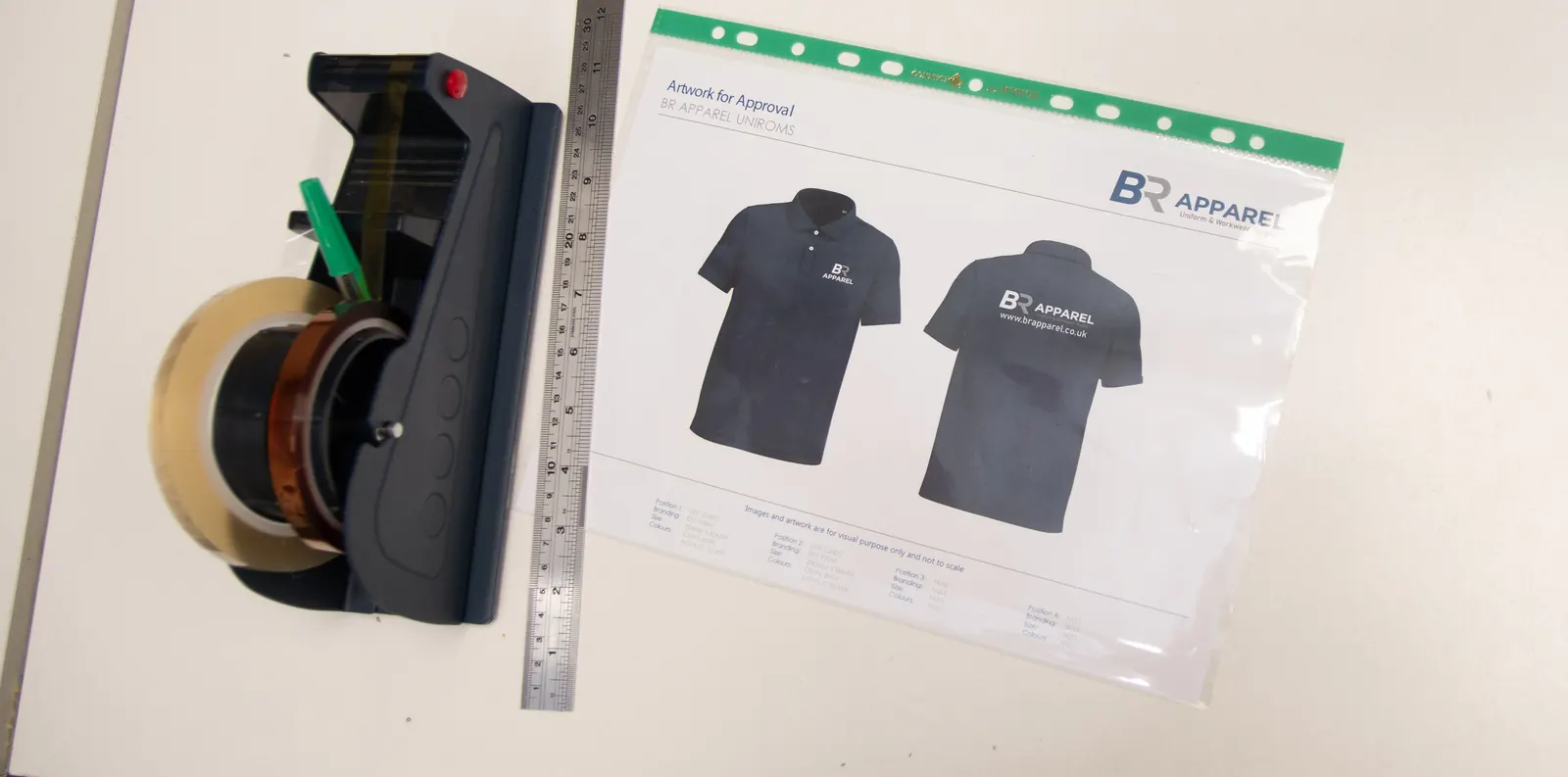
On timing: woven labels take 7 to 10 working days from the label maker, on new and repeat orders alike. They run alongside production rather than adding to it. A relabelled order is four to six weeks from artwork approval. Send the label artwork with the garment artwork, so the label is never the thing holding the date.
Option two: a tagless printed label
Instead of a woven label sewn in, your brand is printed inside the neck. It is the quicker route. Orders without labels are quicker: decoration and finishing only is usually two to three weeks, against four to six for a relabelled order. If a launch date is fixed and close, that difference can decide it.
The trade-off is how it reads. Woven is the retail standard, and it is what a customer expects to find in the neck of a garment they paid full price for. A printed label puts your name in the neck, but it does not read the same way when a customer turns the collar over. Tell us the garments you have chosen and we will confirm how the printed label works on each of them before you commit.
Option three: leave it in
Leaving the supplier label in is a legitimate choice, and sometimes the right one. If you are testing whether a design sells, printing event merchandise, or ordering under 25 garments, it is what you get. Most print on demand garments ship this way, because the label is rarely changed at that volume. On Native Spirit there is nothing to leave in: the neck is blank. We wrote up that trade-off in own label vs print on demand.
The honest test is who you are selling to. If they have no reason to look in the neck, leave it. If you are charging a retail price, they will look.
“If you are charging a retail price, they will look.”
The three options side by side
| What is in the neck | Lead time | Best for | |
|---|---|---|---|
| Relabel | Your woven label, with a printed care label and swing ticket | Four to six weeks from artwork approval | A brand selling at a retail price |
| Tagless printed label | Your brand printed inside the neck; we confirm the supplier label per garment | Usually two to three weeks | A fixed launch date that is close |
| Leave it in | The supplier’s label | Usually two to three weeks | Testing a design, merchandise, runs under 25 |
Care labels are part of the same job
Textile products sold in the UK must show their fibre composition. Wash care symbols are not required by law, but retailers and customers expect them, and a garment without them does not read as finished. We apply both on a printed care label, alongside your woven brand label rather than instead of it.
Composition differs by style, which is one more reason to know your codes. The Cruiser 2.0 (STSU177) is 100% organic ring spun combed cotton. The Native Spirit Oversized Hoodie (NS408) is 85% organic ring spun combed cotton and 15% recycled polyester. Both are on the hoodie page with their fabrics listed.
Caps have no neck
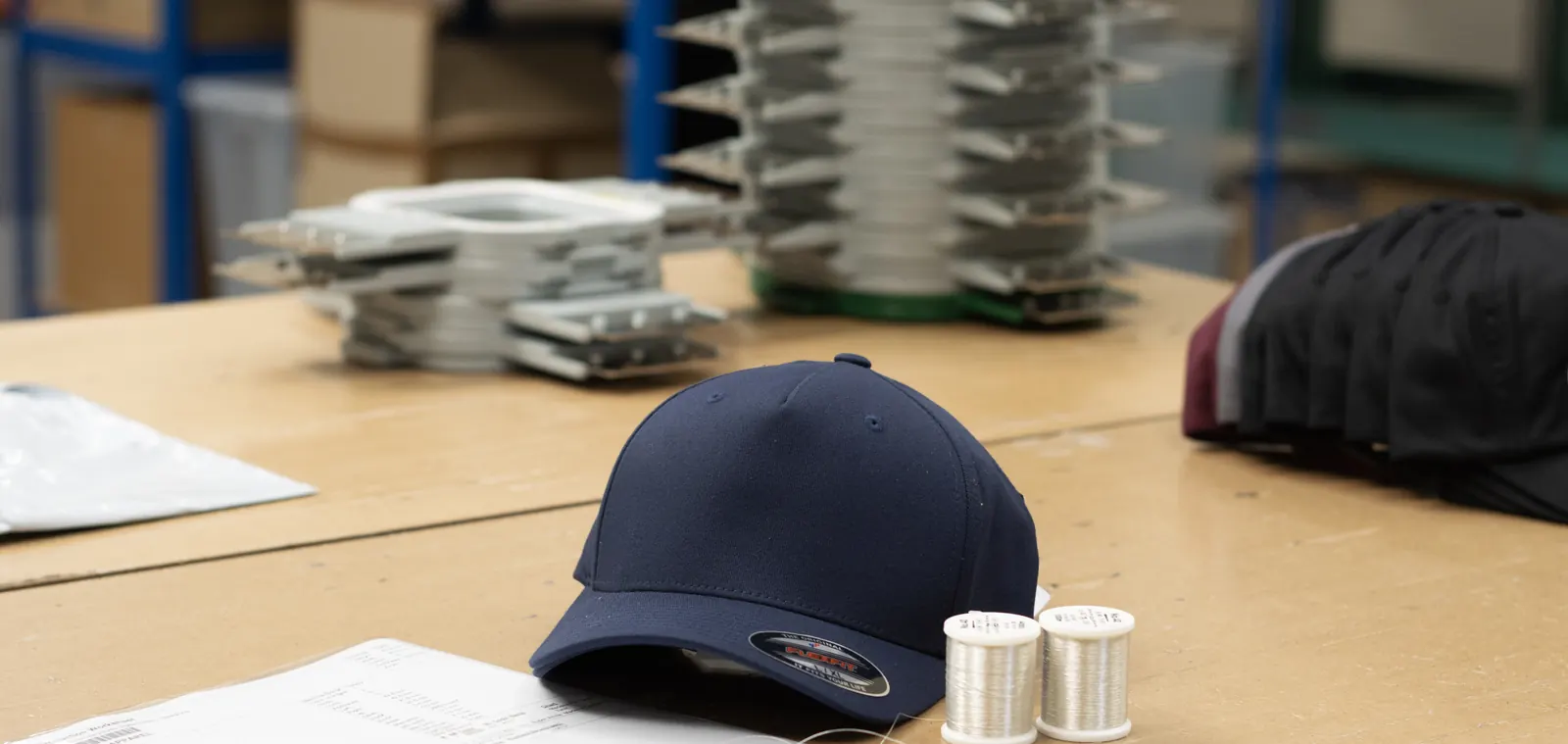
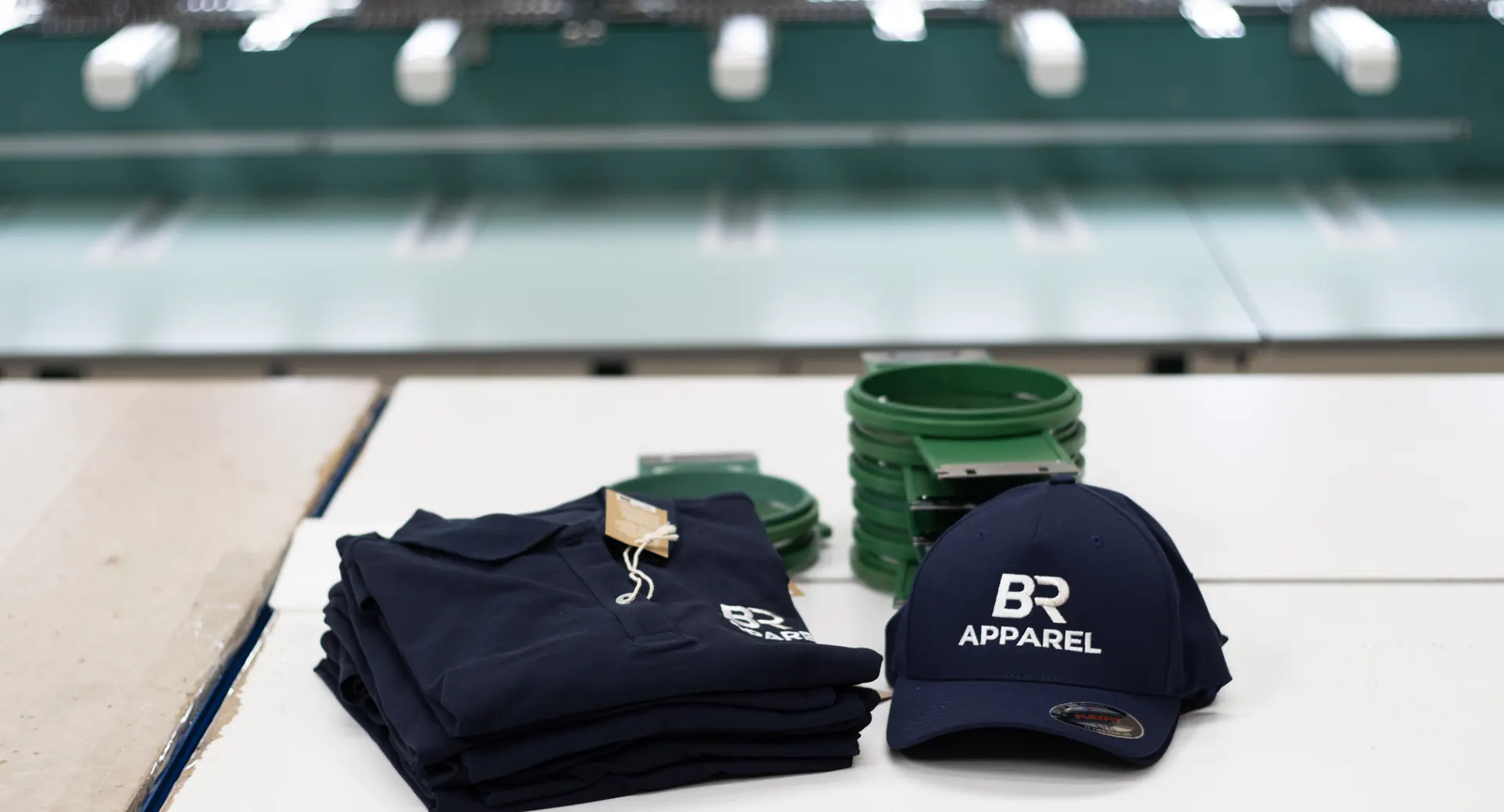
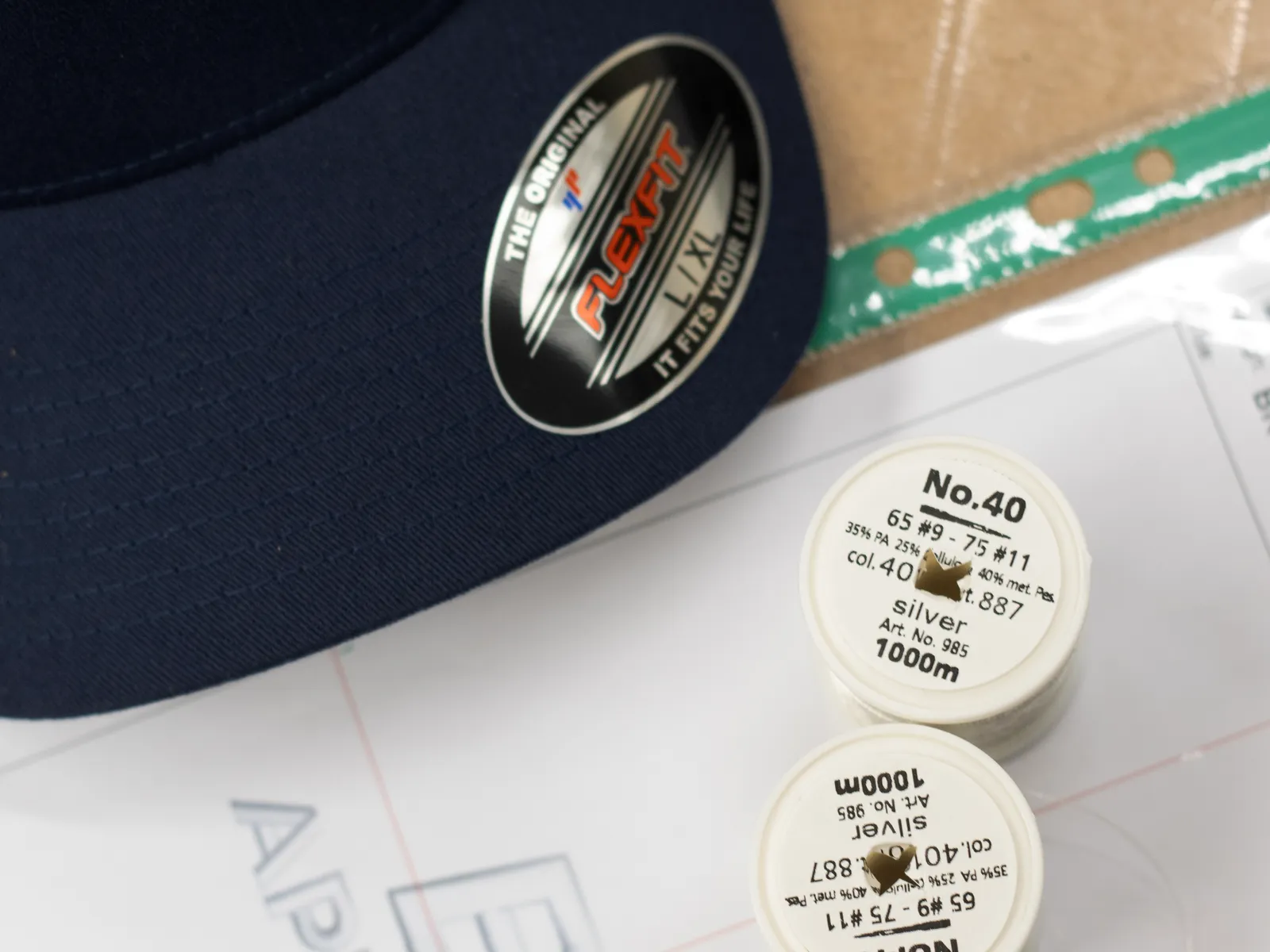
On a cap your label goes on the inner panel instead, so the cap reads as yours when it is turned over. It is a different operation to relabelling a garment, with the same result. Flexfit caps such as the F6277 curved peak and the F110 flat peak snapback also carry the elliptical Flexfit emblem, so decide early whether you want it left on or removed. The full cap and beanie range is on the caps page.
Where to go next
If the label is the part you have been putting off, it is the least expensive part of building a brand and the part most new brands skip. The minimums behind it are in minimum order quantities explained, and why the labels cost you nothing on the next run is in why your second order is cheaper. Tell us the garments, the quantity and what you want in the neck, and get your first drop quoted.